
SpaceX has finally blasted onto the public market, turning years of IPO speculation into one of the most explosive stock stories of 2026. But before investors rush into SPCX, they need to understand the valuation, limited float, index-fund buying pressure, and governance risks behind Elon Musk’s newly listed space empire.
SpaceX Stock
SpaceX stock is no longer just a distant IPO rumor. Space Exploration Technologies Corp. has now completed its initial public offering, and its Class A common stock trades on Nasdaq under the ticker symbol SPCX.
That is a major change from previous years, when SpaceX remained private, and investors could only gain exposure indirectly through private-market funds, venture capital holdings, specialist pre-IPO platforms, or listed companies with some connection to the space economy.
The investment question has now changed. It is no longer simply, “Can you buy SpaceX stock?” Investors can now buy SPCX through a broker that offers U.S.-listed shares. The more important question is whether SpaceX stock is attractive at its public-market valuation, given the company’s growth potential, valuation risk, limited float, governance structure, and likely demand from index funds.
SpaceX is not a normal IPO. It combines a dominant rocket-launch business, the Starlink satellite internet network, major government and defense contracts, and growing investor excitement around space, connectivity, and artificial intelligence infrastructure.
Can You Buy SpaceX Stock?
Yes. Ordinary investors can now buy SpaceX stock on the public market under the ticker symbol SPCX, assuming their broker provides access to Nasdaq-listed U.S. shares.
That is the important update. SpaceX is no longer only a private-market opportunity. Retail investors no longer need to rely solely on pre-IPO platforms, private funds, or indirect exposure through other companies.
However, investors should distinguish between three different types of access.
First, buying SPCX after the IPO is a normal form of public-market access. Investors buy the stock at the current market price, just as they would buy Apple, Tesla, Nvidia, or any other publicly traded company.
Second, receiving an IPO allocation is different. Some retail investors and selected broker clients may have received shares at the IPO price before public trading began. These allocations can come with broker-specific restrictions, including limits on quickly selling, or “flipping,” IPO shares.
Third, indirect exposure still exists through funds and ETFs that own SpaceX stock. This is not the same as owning SpaceX directly. Investors are buying the fund, its fees, its other holdings, and its weighting rules.
For most investors, the cleanest route is now direct public-market ownership through SPCX. But access does not automatically mean value. The correct approach is to evaluate the company’s valuation, growth, profitability, dilution risk, capital requirements, and governance before buying.
SpaceX Stock Symbol
The SpaceX stock symbol is SPCX.
This is a major update from earlier versions of this article. Previously, SpaceX had no public stock symbol because it was a private company. That is no longer the case. SpaceX now trades publicly on Nasdaq under SPCX.
Investors should still be careful when searching for the ticker. Avoid confusing SpaceX with unrelated ETFs, SPACs, funds, or older securities using similar space-themed names. The relevant publicly traded SpaceX stock symbol is SPCX.
Why the Nasdaq-100 Issue Matters for ETF Investors
One of the most important risks is not just that SpaceX has gone public. It is how quickly SpaceX could become part of major indexes.
Nasdaq changed its methodology in 2026 to allow very large newly listed companies to enter the Nasdaq-100 much faster than under the old framework. Under the fast-entry rule, a qualifying mega-cap Nasdaq listing can be considered for inclusion after a short trading period, provided it meets the required criteria.
That matters because enormous ETFs and index products, including Nasdaq-100 funds such as QQQ, track the Nasdaq-100. If SpaceX is added quickly, passive index funds may need to buy the stock shortly after the IPO.
This creates several risks for investors.
First, index funds may become forced buyers before the market has had much time for normal price discovery.
Second, SpaceX may initially have a relatively limited public float. If only a small percentage of shares are freely tradable, large passive buying demand can increase volatility.
Third, ETF investors may gain exposure to SpaceX automatically, even if they never chose to buy SPCX directly.
Fourth, SpaceX is a founder-controlled company. Public shareholders may own economic exposure, but control and voting power remain highly concentrated.
Fifth, if SpaceX is added to additional growth, technology, total-market, or global indexes over time, its influence could spread beyond Nasdaq-100 products into broader ETF portfolios.
This does not mean every ETF investor will immediately own SpaceX. A dividend ETF, value ETF, bond ETF, international ETF, or sector-specific ETF may not hold SPCX. But investors who own Nasdaq-100 funds, large-cap growth funds, total-market funds, or technology-heavy ETFs should watch index inclusion closely.
The important point is that SpaceX is no longer only an IPO story. It is now also an index-fund story.
For active investors, the question is whether SPCX is worth buying at the market price.
For passive investors, the question is whether their ETFs may soon own SpaceX.
Elon Musk’s Voting Rights and Control
Another major concern is shareholder control.
SpaceX’s proposed structure gives Elon Musk and insiders enormous voting power. Public investors are expected to receive Class A shares, while Musk and certain insiders hold supervoting Class B shares.
This means public investors may provide capital, but not meaningful control.
Reports based on SpaceX’s filing show Musk holding a large equity stake while controlling a far larger share of voting power. This dual-class structure would allow Musk to retain decisive influence over the board, strategy, and major corporate decisions after the IPO.
There are two ways to look at this.
The bullish argument is that SpaceX became successful because Musk had the freedom to think long term, take huge risks, and ignore short-term Wall Street pressure. Investors who want exposure to SpaceX may accept limited voting rights as the price of buying into Musk’s vision.
The bearish argument is that public shareholders may have little ability to challenge management if things go wrong. Governance risk matters. If investors cannot meaningfully influence board composition, executive decisions, related-party transactions, acquisitions, or strategic direction, then they are trusting one person and a small group of insiders with extraordinary power.
That may work brilliantly. It may also create a serious risk.
Investors should understand that buying SpaceX stock may not be like buying a normal public company. It may be more like buying economic exposure to a founder-controlled empire.
5 Public Space Stocks to Watch
There is no perfect public substitute for SpaceX. No listed company combines reusable launch, Starlink, Starship, satellite internet, government contracts, and Musk-led execution in the same way.
However, investors interested in exposure to space and satellite can research publicly traded alternatives.
1. Rocket Lab (RKLB)
Rocket Lab is one of the closest public-market comparisons to SpaceX because it is a genuine space infrastructure company rather than a traditional defense contractor with a space division. The company operates in launch services and space systems, giving investors exposure to small-launch missions, spacecraft components, satellite manufacturing, mission operations, and broader space infrastructure. Its Electron rocket has made Rocket Lab one of the more credible public launch providers. In contrast, its developing Neutron rocket is intended to enable the company to move into larger payloads and a more competitive segment of the launch market.
The key difference is scale. Rocket Lab is far smaller than SpaceX and remains a much more speculative investment. That creates more upside if the company executes well, but also more risk because it does not yet have anything close to SpaceX’s Starlink cash-flow engine, launch cadence, or government-contract depth. Investors viewing Rocket Lab as a SpaceX alternative should treat it as an emerging space platform rather than a direct substitute. It offers purer public space exposure, but with higher execution risk and far less financial maturity.
2. Iridium Communications (IRDM)
Iridium Communications is a more established satellite communications company with a very different risk profile from SpaceX. Its low-Earth-orbit satellite network provides global voice, data, and positioning, navigation, and timing services, especially in areas where terrestrial wireless or wired networks are limited or unavailable. That makes Iridium important for maritime, aviation, government, defense, remote industrial, and emergency communications markets.
Unlike Rocket Lab or AST SpaceMobile, Iridium is not mainly a speculative buildout story. It is already an operating satellite communications business with recurring service revenue, an installed customer base, and a defined niche in resilient global connectivity. The trade-off is that Iridium does not offer the same explosive growth narrative as SpaceX or Starlink. It is better viewed as a steadier satellite communications stock, not a high-growth space platform with reusable rockets, mega-constellations, or Mars-scale ambitions.
3. AST SpaceMobile (ASTS)
AST SpaceMobile is one of the most interesting public satellite stocks because it is trying to build a space-based cellular broadband network that connects directly to ordinary smartphones. If successful, the company could help solve one of the biggest gaps in global mobile coverage: connecting people in rural, remote, maritime, and underserved areas without requiring a special satellite phone. That makes AST SpaceMobile conceptually closer to Starlink’s direct-to-cell opportunity than to a traditional satellite operator.
The risk is that AST SpaceMobile is still in a heavy execution phase. The company must build and launch satellites, secure regulatory approvals, deepen partnerships with mobile network operators, finance the constellation, and demonstrate that the service can operate commercially at scale. This gives ASTS enormous theoretical upside, but also makes it one of the riskiest stocks in the satellite communications sector. Investors should not confuse a large addressable market with a proven business model.
4. Northrop Grumman Corp.
Northrop Grumman gives investors exposure to space systems, military aircraft, missile defense, advanced weapons, mission systems, networking, communications, and strategic deterrence. Its space business is important, but it operates within a much larger defense and national security company. That makes Northrop a more diversified way to invest in the space economy, especially where space overlaps with missile warning, surveillance, communications, defense systems, and government programs.
The advantage of Northrop Grumman is stability. It has deep government relationships, a large backlog, and decades of experience in defense contracting. The disadvantage is that it will never trade like a pure-play space growth stock unless its broader defense business also attracts strong investor demand. For investors seeking SpaceX-like upside, Northrop is probably too mature and diversified. For investors seeking space exposure with the resilience of the defense sector, it may be a more conservative alternative.
Northrop Grumman is building the Cygnus spacecraft, which will haul cargo to the International Space Station. Northrop Grumman is one of two companies with a contract to haul cargo to the ISS; the other is Elon Musk’s SpaceX.
Northrop Grumman could design and build the Habitation and Logistics Outpost, or HALO, a component of NASA’s proposed Lunar Gateway. The Lunar Gateway is NASA’s proposed new moon mission.
Subsidiary SpaceLogistics LLC is developing vehicles to service and repair satellites in orbit.
Northrop Grumman generates substantial profits, with a 19% profit margin and a $7 billion profit in 2022.
Northrop Grumman (NOC) currently has a dividend payout ratio of 18% and a yield of 1.4% in 2023. Given its dividend and cash, I consider Northrop Grumman an excellent income stock.
Northrop Grumman suggests that Blue Origin could be a good investment opportunity someday. However, that day may be many years away.
Stock Rover 4.7/5⭐ : My Top Pick for Smart Investors
Investing In Stocks Can Be Complicated. Stock Rover Makes It Easy.
★
Growth Investing - with industry-leading
Research Reports ★
★ Value Investing - using Warren Buffett's Fair Value and Margin-of-Safety ★
★ Income Investing - rank by yield, growth, quality, and safety using 650 metrics ★
"I have been researching and investing in stocks for 20 years! I now manage all my long-term investments using Stock Rover." — Barry D. Moore, Founder: LiberatedStockTrader.com
5. Lockheed Martin Corporation.
Lockheed Martin is another major aerospace and defense company with meaningful exposure to space, but it is not a pure space stock. Its business spans aeronautics, missiles and fire control, rotary and mission systems, and space. The space segment includes satellites, strategic systems, missile warning, national security space programs, and other mission-critical government work. This gives Lockheed a major role in the institutional side of space, especially in national defense and advanced communications.
View an interactive LMT chart on Trendspider
Lockheed Martin is best understood as a defense cash-flow and backlog story with space as one important pillar. It is not trying to become the next SpaceX, and investors should not expect the same kind of disruptive launch economics or Starlink-style consumer growth. Its appeal is different: scale, government contracts, dividends, cash generation, and long-cycle defense demand. For conservative investors, Lockheed may be a steadier way to gain exposure to space, but it lacks the pure growth optionality that makes SpaceX so exciting.
6. Boeing Company
Boeing has long-standing exposure to space through NASA, defense, satellites, launch systems, and its Defense, Space & Security segment. In theory, this makes Boeing relevant to any discussion of public space stocks. The company has participated in some of the most important aerospace and space programs in U.S. history, and it remains a major contractor for government and defense customers.
View an interactive Boeing chart
However, Boeing is a very different investment from SpaceX. Its stock is dominated by commercial aircraft production, safety issues, supply chain problems, certification delays, and the long recovery of its core airplane business. Space is only one part of a much broader and more troubled corporate story. Investors looking for SpaceX-style exposure should be careful with Boeing because they are also buying commercial aviation turnaround risk, defense-contract risk, execution risk, and years of reputational repair.
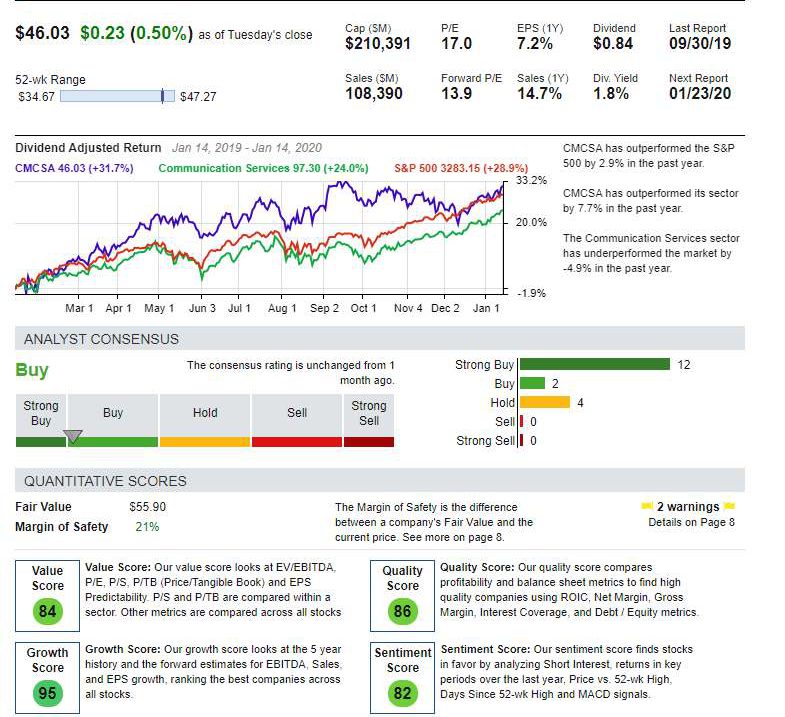
Download a Free Boeing Stock Research Report From Stock Rover
What Does SpaceX Do?
SpaceX began as a rocket company, but the investment case is now much broader.
The company operates across three major areas:
1. Space launch and transportation.
SpaceX’s Falcon 9 rocket changed the economics of launch by making rocket boosters reusable. The company launches satellites, transports cargo and astronauts, and serves commercial, government, and defense customers.
2. Starlink satellite internet.
Starlink is the financial engine of the company. It provides broadband internet via a giant low Earth orbit satellite network. Starlink serves residential users, businesses, ships, aircraft, governments, and military customers.
3. AI and compute infrastructure.
SpaceX’s latest filing also pushes the company beyond rockets and broadband into AI infrastructure. That changes the investment story. SpaceX is no longer just a space company; it is being presented as a platform for space, connectivity, and AI.
That broader story helps explain investor excitement, but it also makes the company harder to value. Investors are not simply pricing a rocket business. They are being asked to value satellite internet, government contracts, reusable launch systems, AI infrastructure, future space manufacturing, and Elon Musk’s long-term Mars ambitions in a single package.
SpaceX Financials
SpaceX’s IPO filing gives investors a much clearer look at the company’s financial position than was available when it was private.
The key numbers are impressive, but they are not risk-free.
| Metric | Latest disclosed figure |
|---|---|
| 2025 revenue | $18.7 billion |
| 2025 net loss | $4.9 billion |
| 2025 adjusted EBITDA | $6.6 billion |
| Starlink / Connectivity revenue | $11.4 billion |
| Starlink / Connectivity operating income | $4.4 billion |
| Starlink subscribers | 10.3 million by March 2026 |
| Long-term debt | $29.1 billion by March 2026 |
The most important conclusion is that Starlink appears to be the profit engine. The rocket and space segment is strategically important, but Starlink is what gives SpaceX recurring revenue at scale.
That matters because investors are not just buying a company that launches rockets. They are buying a global satellite broadband business with significant operating income, layered atop a capital-intensive space transportation business and a fast-growing AI infrastructure strategy.
SpaceX Valuation: A Great Company Can Still Be an Expensive Stock
The biggest concern for investors is valuation.
Reports suggest SpaceX is targeting a valuation of roughly $1.75 trillion, with some estimates putting the range at around $2 trillion. If the IPO prices near those levels, SpaceX would immediately become one of the most valuable companies in the world.
That may sound exciting, but valuation matters.
At a $1.75 trillion valuation and 2025 revenue of about $18.7 billion, SpaceX would trade at roughly 94 times sales. That is an extraordinary multiple, even for a world-class growth company. It means investors would be paying today for many years of future success.
This does not mean SpaceX is a bad company. It means the stock could be priced for perfection.
To justify that kind of valuation, SpaceX would need to keep growing Starlink rapidly, protect high margins, execute on Starship, expand government and defense work, turn AI infrastructure into a profitable business, and avoid major regulatory, technical, or political setbacks.
That is a lot to ask from any company, even one led by Elon Musk.
The key investment lesson is simple: a revolutionary company can still be a poor investment if the entry price is too high.
SpaceX Investment Risks
SpaceX is one of the most exciting companies in the world, but investors should not confuse excitement with safety.
Here are the main risks to consider before buying SPCX after the IPO.
1. Valuation Risk
The IPO valuation may already price in years of future growth. If SpaceX lists at a price-to-sales ratio near 100, even strong business performance may not be enough to drive the stock higher.
High expectations can be dangerous. When a stock is priced for perfection, small disappointments can cause large losses.
2. Low-Float Volatility
If only a small percentage of SpaceX shares trade publicly after the IPO, the stock could be volatile. Strong demand from institutions and ETF providers could push the price up quickly, but a limited float can also exacerbate sell-offs if sentiment changes.
3. Starlink Execution Risk
Starlink is the core financial engine. It must keep adding subscribers, expanding coverage, managing satellite replacement costs, and defending pricing power.
The risk is that subscriber growth comes with declining average revenue per user, increased competition, regulatory friction, or higher-than-expected capital spending.
4. Starship Risk
Starship is central to the long-term SpaceX vision. It could dramatically reduce launch costs and open new markets. But it is still a technically ambitious program with high development costs and execution risk.
If Starship succeeds, the upside could be enormous. If it is delayed, over budget, or technically constrained, the valuation could come under pressure.
5. AI Spending Risk
SpaceX is increasingly tied to AI infrastructure. That gives investors a new growth story, but it also adds cash-burn risk. AI data centers and compute infrastructure require enormous capital investment, and the economics are still developing.
Investors should ask whether AI strengthens SpaceX’s business model or distracts from the core rocket and Starlink opportunity.
6. Government and Defense Dependence
SpaceX benefits from important government and defense contracts. These can provide durable revenue, but they also introduce political and regulatory risk.
Changes in government priorities, procurement rules, national security policy, or international relations could affect parts of SpaceX’s business.
7. Governance Risk
Musk’s voting control means public shareholders may have limited influence. That can be positive if it protects long-term innovation, but negative if investors need accountability.
Governance risk is not theoretical. It directly affects shareholder rights, board independence, related-party decisions, and public investors’ ability to challenge management.
8. Key Person Risk
SpaceX is deeply associated with Elon Musk. His vision is a major asset, but it also creates key-person risk. Musk is involved in multiple companies, including Tesla and AI ventures, and his public profile can create both opportunity and volatility.
Is SpaceX Stock a Buy After the IPO?
SpaceX may be one of the most important public companies of the next decade. It has a powerful launch advantage, a fast-growing Starlink business, deep government relationships, and an ambitious long-term vision.
But that does not automatically make SPCX a buy at any price.
For long-term investors, the best approach may be patience. The first trading days of a major IPO can be driven by excitement, index speculation, limited float, and media attention. That is not always the best environment for rational valuation.
A more disciplined investor may want to wait for:
- the final IPO price range
- The first public quarterly results
- clearer segment-level profitability
- Starlink ARPU trends
- debt and capital spending updates
- lockup-expiration dynamics
- Nasdaq-100 inclusion details
- evidence that AI spending can generate returns
For traders, SPCX may become one of the most-watched momentum stocks in the market. For investors, the challenge is different: determining whether long-term cash flows can justify a valuation of $1 trillion or more.
Bottom Line: SpaceX Is a Historic IPO, But Not a Risk-Free Investment
SpaceX is one of the most impressive private companies ever built. It has transformed rocket launches, built the world’s most important satellite broadband network, and created a business that sits at the intersection of space, communications, defense, and AI.
The IPO could be historic.
But investors should separate the company from the stock.
SpaceX may be an extraordinary business, but SPCX could still be overvalued at the wrong price. The risks include an extreme valuation, low public float, rapid inclusion in Nasdaq-100 ETFs, heavy capital spending, Starship execution risk, AI losses, and a governance structure that leaves Elon Musk with overwhelming control.
For investors, the right question is not “Is SpaceX amazing?”
It clearly is.
The better question is: At what price does SpaceX become a good investment rather than just a great story?

I want invest in space related company.