
Our independent, scientific lab-testing methodology version 3 enables you to compare trading software across 58 tests and instantly see which tool wins in each category.
It is designed to isolate technical truth from promotional bias. By utilizing a systematic audit framework—comprising repeatable performance protocols, standardized scoring rubrics, and clinical audit notes—we ensure that every platform undergoes the same stress tests.
Instead of relying on anecdotal opinions, we ground every rating in Quantitative Performance Metrics (latency, throughput, and synchronization speed, feature architecture, automation depth, and ecosystem connectivity.
What Our Scores Mean
Every category is audited on a 0.00 to 5.00 scale, which I then map to a technical tier. This allows you to immediately identify the tool’s operational grade:
| Score | Tier | Tool Verdict | Feature Verdict |
|---|---|---|---|
| 4.7-5.0 | AAA | Institutional; elite superpowers. | Flawless; industry-leading. |
| 4.3-4.6 | AA | Advanced Pro; high-performance. | Robust; professional grade. |
| 4.0-4.2 | A | Reliable; professional standard. | Functional; core utility. |
| 3.0-3.9 | B | Retail Grade; notable gaps. | Basic; limited depth. |
| 0.0-2.9 | C | Sub-Standard; poor value. | Deficient; critical flaws. |
Jump to the individual tests and category-winning tools.
Test & Benchmarking Protocol 2026
To ensure ratings remain objective and defensible, every score is interpreted relative to the Collective Aggregate.
We score all trading tools across 17 categories, using 58 specific tests:
- High: The theoretical performance ceiling (the best result observed in my entire dataset).
- Median: The “Market Standard” (typical performance across all 35+ audited tools).
- Low: The performance floor (the worst observed result in the dataset).
Here are all the metrics, with high and low median results across all the tools we have tested. This provides unique insight into what to expect from trading tools and how they compare.
| Category Primary Metric | Secondary Metrics | High | Median | Low | Calculation |
|---|---|---|---|---|---|
| Composite Lab Performance Score (CLPS) | Overall Rating | 4.75 | 4.21 | 2.93 | Average for all ratings + 5X Superpower boost for Top 5 killer features |
| Pricing & Value | $ per feature | $23.37 | $5.95 | $1.94 | Effective Monthly Cost / Total Features |
| Effective Monthly Cost $ (EMC) | $303.87 | $83.32 | $22.50 | EMC = (Plan price + required real-time data fees + any required add-ons) / month | |
| Cost-per-day $ | $9.99 | $2.74 | $0.74 | On an annual plan. Minimum viable annual plan with real-time exchange data or main killer features included. | |
| Value Score (VP) | Value Score (VP) | 4.37 | 2.82 | 1.70 | Quality = Avg of feature quality ratings (1–5) 60% • Breadth = Feature richness 30% • Access = Device/platform coverage points 10% |
| Value Rank | 5.00 | 2.50 | 1.00 | Percentile Ranking | |
| Feature Quality | 4.16 | 2.99 | 2.00 | Average of All Feature Quality Ratings | |
| Feature Breadth | 17 | 12 | 9 | Feature richness (count of meaningful core features) | |
| Feature Depth | 4.75 | 3.00 | 1.00 | Percentile Ranking | |
| Device Support Depth | 5.00 | 2.00 | 1.00 | Web 2 points; PC 1; Android 1; iOS 1 | |
| Speed & Ease of Use | Speed & Use Index Rating | 5.00 | 4.50 | 3.30 | Total points index |
| Time to Chart Speed (Seconds) | 17.03s | 4.70s | 1.6s | Seconds from clicking the icon to a fully loaded chart with 200 price bars & 2 indicators | |
| Time to Chart Performance | 5.00 | 4.50 | 3.00 | Speed to Chart Points: <5s=5; <10=4.5; <15=4; <20=3 | |
| Multi-Chart Latency (ms) | 667ms | 209ms | 10.0ms | Delay in milliseconds when syncing 4 monitors/charts | |
| Multimonitor Chart Speed | 5.00 | 4.00 | 2.00 | Multi-Chart Sync Points: <50ms=5; <100=4.5; <200=4; <300=3.5; <400=3; <500=2.5; >500=2 | |
| 3 Click Rule: Ease of Use | 5.00 | 5.00 | 2.00 | 3 Click Points (each click > 3 = 1 minus point) | |
| Charting & Research | Chart Analysis Depth Index | 5.00 | 3.17 | 0.50 | Total Points |
| Chart Types | 38.00 | 10.00 | 1.0 | Total Count | |
| Chart Depth | 5.00 | 3.00 | 0.30 | Chart Type Score: 0.3 points per chart | |
| Indicators | 400 | 116 | 0 | Total Count | |
| Indicator Depth | 5.00 | 2.90 | 0.00 | Indicator Score: 0.025 points per indicator | |
| Custom Indicator Coding | 5.00 | 2.50 | 0.00 | Available = 5 points | |
| Chart Pattern Depth & Accuracy | Pattern Recognition Efficacy & Depth | 4.88 | 2.73 | 0.00 | Composite efficacy & depth |
| Total Patterns | 226 | 57.50 | 0 | Total patterns recognized | |
| Pattern Recognition Depth | 5.00 | 1.90 | 0.00 | 0.33 points per pattern recognized | |
| Candle Patterns Recognized | 172.00 | 20.00 | 0 | Candle patterns recognized (count) | |
| Chart Price & Trend Patterns Recognized | 54 | 16 | 0 | Price/trend patterns recognized (count) | |
| Accuracy | 95% | 89% | 82% | Percent accurate | |
| Pattern Recognition Accuracy | 4.75 | 4.48 | 0.00 | Accuracy Points: 0.05 points per 1% accurate | |
| Accuracy Points: 0.05 points per 1% accurate | 5.00 | 3.38 | 0.80 | ||
| Scanning Performance | Scanning Score | 5.00 | 3.38 | 0.80 | Composite scanning performance score |
| Scanner Performance (ms) | 7ms | 300ms | 2500ms | Milliseconds to scan the S&P 500 across 5 criteria | |
| Scanning Speed (ms) | 5.00 | 4.00 | 1.00 | Scanner Performance Points: <100ms=5; <200=4.5; <500=4; <1000=3; <2000=2 | |
| Scanner Auto-Refresh Rate (seconds) | 1s | 10s | 60s | Auto-refresh Speed (Not scored) | |
| Scanning Criteria & Depth (Count) | 675 | 200 | 30 | Total criteria count | |
| Scanning Criteria & Depth (Points) | 5.00 | 2.50 | 0.80 | 0.0125 points per criterion | |
| Custom Code Scanning | 5.00 | 2.50 | 0.00 | Exists = 5 points | |
| Backtesting Performance | Backtesting Speed, Depth & Reporting Quality | 4.90 | 3.38 | 0.00 | Composite speed + depth + reporting quality |
| Backtesting Speed (ms) | 7ms | 302ms | 6000ms | Time to simulate 10 years of daily data or 2 months of 5-min data (milliseconds) | |
| Backtesting Speed (Points) | 5.00 | 4.25 | 0.00 | Speed Points: <200ms=5; <500ms=4.5; <10000ms=4; <20000ms=3 | |
| No Coding Required | 5.00 | 5.00 | 0.00 | Zero-code backtesting = 5 points | |
| Flexible Coding Backtesting | 5.00 | 5.00 | 0.00 | Exists = 5 points | |
| Backtesting Report Quality (Percent) | 100% | 70% | 0% | Backtesting report quality percent | |
| Backtesting Report Quality (Points) | 5.00 | 2.25 | 0.00 | 0.05 points per 1% reporting criteria coverage | |
| Multi-Stock Basket Backtesting | 5.00 | 5.00 | 0.00 | If exists = 5 points | |
| Trading Bot & Auto-Trading Reliability | Trading Bot & Auto-Trading Reliability | 4.50 | 2.50 | 0.00 | Rating (1.0–5.0) across three dimensions (adds to 5.0) |
| Automation Path | 2.00 | 1.00 | 0.00 | 0.0–2.0 scale; 40% weight (none → alerts → webhook → native execution) | |
| Strategy/Bot Sophistication | 2.00 | 1.50 | 0.00 | 0.0–2.0 scale; 40% weight (simple → scripting → bot platform depth) | |
| Operational Assurance | 1.00 | 0.00 | 0.00 | 0.0–1.0 scale; 20% weight (status reporting → explicit SLA) | |
| AI & Algo Index | AI & Algo Index | 5.00 | 2.00 | 1.00 | AI & Algo Index (1.0–5.0): Algo Depth + AI Layer + Transparency |
| Alert Speed | Alert Flexibility & Depth Index | 4.67 | 3.67 | 2.30 | Composite alert flexibility & depth index |
| Concurrent Alerts | 5.00 | 5.00 | 5.00 | 1 point per 50 concurrent alerts (max 5 points) | |
| Concurrent Alert Count | 2000 | 875 | 400.0 | Concurrent alerts (raw count) | |
| Alert Streams Richness | 5.00 | 2.00 | 1.00 | 1 point per stream (email/webhook/SMS/app/multi-condition), max 5 | |
| Alert Speed Rating | 5.00 | 3.00 | 1.00 | Speed rating (measured metric varies by tool) | |
| Trade Signal Quality | Trade Signal Quality & Efficacy | 5.00 | 2.50 | 0.00 | 5 points = audited specific trade signals; 2.5 = gauges/systematic signals |
| Broker Integration Performance & Depth | Asset & Data Coverage Index | 5.00 | 1.55 | 0.70 | Composite: Live Trading + Broker count points + Asset/Data coverage points |
| Live Trading | 5.00 | 5.00 | 0.00 | Live trading supported = 5 points | |
| Total number of brokers integrated | 1200 | 1 | 0 | Broker integrations (raw count) | |
| Broker Integration (Points) | 5.00 | 0.10 | 0.00 | 0.1 point per broker to max 5 points | |
| Asset & Data Coverage | 5.00 | 2.00 | 2.00 | 1 point each: Stocks, Options, FX, USA exchanges, International exchanges | |
| Portfolio Tool Performance | Portfolio Management Rating | 4.80 | 2.80 | 2.00 | % of critical financial metrics covered (risk/dividend/health/correlation) |
| Financial News Speed & Depth | Financial News Speed & Quality Rating | 5.00 | 2.30 | 0.00 | Rubric adds to 5: scanning, chart news, watchlist news, filters, providers, alerts, <1m real-time |
| Community Utility Index | Community Utility Index | 5.00 | 3.25 | 1.80 | Composite community utility score |
| Active Community Size | 5.00 | 3.00 | 2.00 | Scale-based “crowd density” rating (Global Standard → Non-existent) | |
| Quality of Community Contribution | 5.00 | 3.50 | 1.50 | Quality of IP scale (institutional alpha → no IP) | |
| Support & SLA Audit | Time-to-Human Benchmarks | 5.00 | 3.75 | 1.00 | Composite support access + response time benchmark |
| Support Communication Channels | 5.00 | 3.50 | 1.00 | Access scale: phone/chat/email/community → KB only | |
| Support Response Times | 5.00 | 4.00 | 1.00 | SLA scale: <2 mins chat/phone & <2h email → best effort |
We partner with some of the platforms we feature. That never affects our ratings or rankings. If you use our links, we may earn a commission—at no extra cost to you—and in most cases we negotiate preferential pricing or exclusive discounts for you.
Composite Lab Performance Score (CLPS)
What We Measure: The Composite Lab Performance Score (CLPS): an overall benchmark of lab-tested capability across all categories, with an additional weighting boost for the tool’s top 5 “killer” differentiators.
How it’s Calculated: Average of all category ratings, plus a 5× “Superpower” boost applied to the top five standout features that materially outperform competitors.
Why it’s Important: This is the fastest way to compare platforms end-to-end without over-weighting any single feature (like charting or scanning) that may not match your workflow.
Metrics: Composite Lab Performance Score (CLPS)
| Metric | High | Median | Low |
|---|---|---|---|
| Composite Lab Performance Score (CLPS) | 4.75 | 4.21 | 2.93 |
| Composite Lab Performance Score (CLPS) Overall Test Winners | TrendSpider 4.72 | Trade Ideas 4.52 |
Why We Apply the “Superpower Boost”
To reward true innovation, the Composite Lab Performance Score (CLPS) includes a 5X “Superpower Boost” for a tool’s top five killer features. This weighting ensures that if a tool has mastered a specific domain—like TradingView’s near-zero UI latency—that technical achievement is reflected in the final grade.
Pricing Index
What We Measure: The real cost efficiency of a tool: what you pay per meaningful capability after accounting for the minimum viable plan, any required real-time data fees, and paid add-ons.
How it’s Calculated: $/feature = Effective Monthly Cost ÷ Total Features. EMC = (Plan + required real-time data + required add-ons) per month. $/day is a key metric.
Why it’s Important: Tools can look “cheap” until data fees and add-ons are included. This index exposes true ownership cost and avoids pricing surprises after signup.
Metrics: $ per feature | Effective Monthly Cost (EMC) | Cost-per-day
| Metric | Calculation | High | Median | Low |
|---|---|---|---|---|
| Cost-per-day | $/day on an annual plan. Minimum viable plan with real-time exchange data | $9.99 | $2.74 | $0.74 |
| $ per feature | Effective Monthly Cost / Total Features | $23.37 | $5.95 | $1.94 |
| Effective Monthly Cost (EMC) | EMC = (Plan price + required real-time data fees + any required add-ons) / month | $303.87 | $83.32 | $22.50 |
Value Score (VP)
What We Measure: A weighted value model that blends feature quality, breadth of core capabilities, and platform/device access—so you can separate “feature-rich” from “actually good.”
How it’s Calculated: VP = (Quality avg rating × 60%) + (Breadth feature count × 30%) + (Access device points × 10%). Supporting metrics include percentile ranks and coverage points.
Why it’s Important: A high price can be justified if quality and breadth are elite. VP clarifies whether you’re paying for real depth or just a long feature checklist.
Metrics: Value Score (VP) | Value Rank | Feature Quality | Feature Breadth | Feature Depth | Device Support Depth
| Metric | Calculation | High | Median | Low |
|---|---|---|---|---|
| Value Score (VP) | Sum of Feature Quality (60% Weight), Feature Depth (30%) & Device Support Depth (10%) | 4.37 | 2.82 | 1.70 |
| Value Rank | Percentile Ranking | 5.00 | 2.50 | 1.00 |
| Feature Quality | Average of All Feature Quality Ratings | 4.16 | 2.97 | 2.00 |
| Feature Breadth | Feature richness (count of meaningful core features) | 17 | 12 | 9 |
| Feature Depth | Percentile Ranking | 4.75 | 3.00 | 1.00 |
| Device Support Depth | Web 2 points, (PC, Android/iOS/ 1 Point each) | 5.00 | 2.00 | 1.00 |
| Value Score Test Winners | TrendSpider 4.20 | Trade Ideas 4.05 |
Workflow Speed & Ease of Use
What We Measure: How quickly a tool becomes usable in real trading: time-to-chart, multi-chart/multimonitor latency, and friction (click count) to execute common tasks like scanning or trading.
How it’s Calculated: Speed & Use Index aggregates: Time-to-Chart points (threshold scoring), Multi-Chart Sync points (latency tiers), and 3-Click Rule points (penalties beyond 3 clicks).
Why it’s Important: Speed is the edge. If charting, scanning, and execution take extra time or clicks, you miss opportunities and increase decision fatigue under pressure.
Metrics: Speed & Use Index Rating | Time to Chart Speed (Seconds) | Time to Chart Performance | Multi-Chart Latency (ms) | Multimonitor Chart Speed | 3-Click Rule Test | 3 Click Rule: Ease of Use
| Metric | Calculation | High | Median | Low |
|---|---|---|---|---|
| Speed & Use Index Rating | Average of Time to Chart Performance, Multimonitor Chart Speed & 3 Click Rule: Ease of Use | 5.00 | 4.25 | 2.60 |
| Time to Chart Speed (Seconds) | Seconds from clicking the icon to a fully loaded chart with 200 price bars & 2 indicators | 17.03 | 4.70 | 1.60 |
| Time to Chart Performance | Speed to Chart Points (<5s=5, <10=4.5, <15=4, <20=3) | 5.00 | 4.50 | 3.00 |
| Multi-Chart Latency (ms) | Delay in milliseconds when syncing 4 charts | 667 | 209 | 10 |
| Multimonitor Chart Speed | Multi-Chart Sync Points (<50ms=5 … >500ms=2, No Multicharts=0) | 5.00 | 3.50 | 0.00 |
| 3-Click Rule Test | Number of clicks to place a trade or launch a scan | 6 | 3 | 2 |
| 3 Click Rule: Ease of Use | 3 Click Points (each click > 3 = 1 minus point) | 5.00 | 5.00 | 2.00 |
| Speed & Ease of Use Test Winners | Stock Rover 5.00 | Seeking Alpha 5.00 | TrendSpider 4.67 |
Chart Analysis Depth Index
What We Measure: The breadth and depth of charting: number of chart types, indicator library size, and whether you can build/custom-code indicators for proprietary workflows and strategies.
How it’s Calculated: Chart Types and Indicators are converted into points (chart types at 0.3 pts each; indicators at 0.025 pts each). Custom indicator coding is a 5-point capability flag.
Why it’s Important: Deeper charting reduces the need for multiple platforms. Custom coding support is often the dividing line between “visual charting” and real strategy engineering.
Metrics: Chart Analysis Depth Index | Chart Types | Chart Depth | Indicators | Indicator Depth | Custom Indicator Coding
| Metric | Calculation | High | Median | Low |
|---|---|---|---|---|
| Chart Analysis Depth Index | Average of Chart Depth, Indicator Depth & Custom Coding Scores | 5.00 | 3.17 | 0.50 |
| Chart Types | Total Count | 38 | 10 | 1 |
| Chart Depth | Chart Type Score (0.3 points per chart) | 5.00 | 3.00 | 0.30 |
| Indicators | Total Count | 400 | 116 | 0 |
| Indicator Depth | Indicators Score (0.025 points per indicator) | 5.00 | 2.90 | 0.00 |
| Custom Indicator Coding | Available = 5 Points | 5.00 | 2.50 | 0.00 |
Chart Pattern Recognition Depth & Accuracy
What We Measure: The effectiveness of automated pattern recognition: total pattern coverage (candles + price/trend structures) and measured accuracy, so “more patterns” doesn’t mask noisy output.
How it’s Calculated: Depth is scored by patterns recognized (0.33 points each). Accuracy is converted to points at 0.05 points per 1% accuracy, then combined into an overall efficacy score.
Why it’s Important: Pattern engines can accelerate screening and alerts, but only if accuracy is high. False positives waste time and can degrade execution discipline.
Metrics: Pattern Recognition Efficacy & Accuracy | Total Patterns | Pattern Recognition Depth | Candle Patterns Recognized | Chart Price & Trend Patterns Recognized | Accuracy | Pattern Recognition Accuracy
| Metric | Calculation | High | Median | Low |
|---|---|---|---|---|
| Pattern Recognition Efficacy & Accuracy | Average of Pattern Recognition Depth & Accuracy Scores | 4.88 | 2.73 | 0.00 |
| Total Patterns | Count of unique patterns recognized | 226 | 57.5 | 0 |
| Pattern Recognition Depth | 0.33 points per pattern recognized | 5.00 | 1.90 | 0.00 |
| Candle Patterns Recognized | Count | 172 | 20 | 0 |
| Chart Price & Trend Patterns Recognized | Count | 54 | 16 | 0 |
| Accuracy | Percent Accurate | 95% | 89% | 0% |
| Pattern Recognition Accuracy | Accuracy Points (0.05 points per 1% accurate) | 4.75 | 4.48 | 0.00 |
| Chart Pattern Recognition & Accuracy Test Winners | TrendSpider 4.88 | Trade Ideas 4.62 |
Scanning Performance
What We Measure: How fast and how deeply the platform can scan markets: latency across a large universe, criteria richness, auto-refresh capability, and whether custom-code scanning exists.
How it’s Calculated: Scanner speed is calculated using tiered points per millisecond. Criteria depth scores at 0.0125 points per criterion. Custom-code scanning is a 5-point capability flag; refresh rate is tracked.
Why it’s Important: Scanning is your opportunity engine. Faster scans with deeper criteria find setups earlier, reduce missed entries, and cut manual filtering time.
Metrics: Market Scanning Latency & Depth | Scanner Performance (ms) | Scanning Speed (ms) | Scanner Auto-Refresh Rate (seconds) | Scanning Criteria & Depth (Count) | Scanning Criteria & Depth (Points) | Custom Code Scanning
| Metric | Calculation | High | Median | Low |
|---|---|---|---|---|
| Market Scanning Latency & Depth | Average of Scanning Speed, Criteria & Custom Code Scores | 5.00 | 3.38 | 0.80 |
| Scanner Performance (ms) | Milliseconds to scan S&P 500 across 5 criteria | 2500 ms | 300 ms | 7 ms |
| Scanning Speed (ms) | Points (<100ms=5; <200=4.5; <500=4; <1000=3; <2000=2) | 5.00 | 4.00 | 1.00 |
| Scanner Auto-Refresh Rate (seconds) | Auto-refresh speed (not scored) | 60 s | 1 s | 0 s |
| Scanning Criteria & Depth | Total criteria count | 675 | 200 | 30 |
| Scanning Criteria & Depth | Points (0.0125 points per criteria) | 5.00 | 2.50 | 0.80 |
| Custom Code Scanning | Exists = 5 points | 5.00 | 5.00 | 0.00 |
| Scanning Performance Test Winners | Stock Rover 5.00 | TrendSpider 4.67 |
Backtesting Performance & Efficacy
What We Measure: Backtesting Speed, flexibility, and reporting rigor: how quickly strategies can be simulated, whether no-code and coded approaches exist, and whether results are decision-grade.
How it’s Calculated: Speed is scored by tiered milliseconds thresholds. No-code and flexible coding are 5-point capability flags. Report quality scored as % coverage of reporting criteria (0.05 pts per 1%).
Why it’s Important: Backtesting is how you validate edge. If it’s slow, rigid, or weakly reported, you either skip validation or trust misleading results.
Metrics: Quantitative Backtesting Fidelity | Backtesting Speed (ms) | Backtesting Speed (Points) | No Coding Required | Flexible Coding Backtesting | Backtesting Report Quality (%) | Backtesting Report Quality (Points) | Multi-Stock Basket Backtesting
| Metric | Calculation | High | Median | Low |
|---|---|---|---|---|
| Quantitative Backtesting Fidelity | Avg of Backtesting Speed, No Coding, Flexible Coding, Report Quality, Basket Backtesting | 4.90 | 3.38 | 0.00 |
| Backtesting Speed (ms) | Time to run 10y daily or ~2 months 5-min simulation | 6000 ms | 302 ms | 7 ms |
| Backtesting Speed | Points (<200ms=5; <500=4.5; <10000=4; <20000=3) | 5.00 | 4.25 | 0.00 |
| No Coding Required | Zero-code backtesting (5 points) | 5.00 | 5.00 | 0.00 |
| Flexible Coding Backtesting | Exists = 5 points | 5.00 | 5.00 | 0.00 |
| Backtesting Report Quality | Percent of reporting criteria covered | 100% | 70% | 0% |
| Backtesting Report Quality | Points (0.05 points per 1%) | 5.00 | 2.25 | 0.00 |
| Multi-Stock Basket Backtesting | If exists = 5 points | 5.00 | 5.00 | 0.00 |
| Backtesting Performance Test Winners | Optuma 4.94 | TrendSpider 4.88 | MetaStock 4.81 |
Trading Bot & Auto-Trading Reliability
What We Measure: The practical reliability of automation: how orders can be executed (alerts vs webhooks vs native execution), how sophisticated strategies can be, and whether the vendor provides operational assurances.
How it’s Calculated: 5-point rating from three weighted dimensions: Automation Path (40%), Strategy/Bot Sophistication (40%), and Operational Assurance (20%) based on published status/SLA evidence.
Why it’s Important: Automation adds leverage—but failure modes are expensive. This measure separates “can automate” from “can automate reliably under real market conditions.”
Metrics: Trading Bot & Auto-Trading Reliability Rating | Automation Path | Strategy/Bot Sophistication | Operational Assurance
| Metric | Calculation | High | Median | Low |
|---|---|---|---|---|
| Automated Execution & Bot Reliability | Sum of Automation Path, Strategy/Bot Sophistication, Operational Assurance | 4.50 | 2.50 | 0.00 |
| Automation Path | 0.5 none; 1.0 alerts; 1.5 webhook/API handoff; 2.0 native/broker-linked execution | 2.00 | 1.00 | 0.00 |
| Strategy/Bot Sophistication | 0.5 simple; 1.0 multi-condition; 1.5 scripting+test; 2.0 bot-platform depth | 2.00 | 1.50 | 0.00 |
| Operational Assurance | 0.5 public status; 1.0 explicit SLA/credits/uptime promise | 1.00 | 0.00 | 0.00 |
| Bot & Auto-Trading Reliability Test Winners | TrendSpider 4.50 | Trade Ideas 4.00 | Tickeron 4.00 |
Points Scale
Automated Execution & Bot Reliability Trading Bot & Auto-Trading Reliability Rating (1.0–5.0)
Score each tool on three dimensions (adds up to 5.0)
Automation Path (0.0–2.0) 40% Weight
0.5 = none (research/analysis only)
1.0 = alerts only (email/SMS/app)
1.5 = webhook/API handoff (alert → external bot)
2.0 = native or broker-linked execution (orders can be sent automatically)
Strategy/Bot Sophistication (0.0–2.0) 40% Weight
0.5 = simple conditions
1.0 = multi-condition logic/scan logic
1.5 = scripting + backtest/forward test
2.0 = “bot platform” depth (automation frameworks, execution rules, simulation)
Operational Assurance Operational Assurance (0.0–1.0) 20% Weight
0.5 = public status/incident reporting
1.0 = explicit SLA/credits/uptime promise (publicly published)
AI & Algo Index
What We Measure: The platform’s algorithmic intelligence maturity: depth of quant tooling, the presence and usefulness of an AI layer, and transparency (methodology, validation artifacts, disclosures).
How it’s Calculated: 1.0–5.0 score based on: Algo Depth (0–2), AI Layer (0–2), and Transparency (0–1). Strong AI claims require evidence to be scored in the top tier.
Why it’s Important: “AI” is often marketing. This index distinguishes genuine decision-support and model depth from shallow labels that don’t improve outcomes.
Metrics: AI & Algo Index | Algo Depth (B1) | AI Layer (B2) | Transparency (B3)
| Metric | Calculation | High | Median | Low |
|---|---|---|---|---|
| Algorithmic Intelligence & AI Tier Index | Sum of Algo Depth, AI Layer, Transparency Points | 5.00 | 2.00 | 1.00 |
| Algo Depth | 0.5 alerts only; 1.0 rules strategies; 1.5 backtesting+factor; 2.0 advanced quant platform | 2.00 | 1.50 | 0.00 |
| AI Layer | 0.0 none; 1.0 assistive; 1.5 ML signals core; 2.0 AI-native decisioning | 2.00 | 0.00 | 0.00 |
| Transparency | 0.0 black-box; 0.5 some; 1.0 clear methodology + validation | 1.00 | 1.00 | 0.00 |
| AI & Algo Index Test Winners | TrendSpider 5.00 | Trade Ideas 4.50 |
Algo Depth (0.0–2.0 points)
- 0.5 = Screeners/alerts only
- 1.0 = Rules-based strategies/model logic
- 1.5 = Backtesting + factor models/portfolio rules
- 2.0 = Advanced quant platform (ranking universes, optimization, order-generation logic)
AI Layer (0.0–2.0 points)
- 0.0 = No AI layer
- 1.0 = Assistive AI (summaries, tagging, UX copilots)
- 1.5 = ML signals/forecasting/AI scoring as a core feature
- 2.0 = AI-native decisioning or agentic strategy synthesis (strong claims must be evidenced)
Transparency (0.0–1.0 points)
- 0.0 = Black-box outputs (no methodology or validation)
- 0.5 = Some explanation, limited validation
- 1.0 = Clear methodology + validation artifacts (stats, backtests, disclosures, definitions)
Alert Speed & Concurrency
What We Measure: How quickly alerts trigger and reach you, plus how many alerts can run concurrently and how rich the delivery channels are (app, email, webhook, SMS, multi-condition).
How it’s Calculated: Alert Speed Rating is combined with points for Concurrent Alerts (1 point per 50 up to 5) and Alert Streams Richness (1 point per stream up to 5).
Why it’s Important: Alerts are only useful if they’re fast and dependable. Slow or limited alerts turn a proactive workflow into reactive chasing.
Metrics: Alert Trigger Latency & Delivery Speed | Concurrent Alerts | Concurrent Alert Count | Alert Streams Richness | Alert Speed Rating
| Metric | Calculation | High | Median | Low |
|---|---|---|---|---|
| Alert Trigger Latency & Delivery Speed | Avg of Concurrent Alerts, Alert Streams, Alert Speed Rating | 4.67 | 3.67 | 2.30 |
| Concurrent Alerts | 1 point per 50 concurrent (max 5 points) | 5.00 | 5.00 | 5.00 |
| Concurrent Alert Count | Raw alert capacity | 2000 | 875 | 400 |
| Alert Streams Richness | Email/webhook/SMS/app etc. 1 point per stream (max 5) | 5.00 | 2.00 | 1.00 |
| Alert Speed Rating | Speed rating points | 5.00 | 3.00 | 1.00 |
| Alert Speed Test Winners | TrendSpider 4.33 | Benzinga Pro 4.33 |
Trade Signal Quality
What We Measure: The audited quality of trade signals: whether the platform provides specific, testable signals with clear logic, versus generic “buy/sell gauges” that are hard to validate.
How it’s Calculated: Rating framework: 5 points for audited, specific trade signals; 2.5 points for generalized buy/sell gauges or systemic sentiment-style signals (no audited edge).
Why it’s Important: Signals influence real money decisions. If signals aren’t specific and testable, they can create false confidence and inconsistent execution.
Metrics: Signal Alpha & Predictive Efficacy
| Metric | Calculation | High | Median | Low |
|---|---|---|---|---|
| Signal Alpha & Predictive Efficacy | 5 points = audited specific trade signals; 2.5 = buy/sell gauges/systemic signals | 5.00 | 0.00 | 0.00 |
| Trade Signal Quality Test Winners | Trade Ideas 5.00 | Seeking Alpha 5.00 | Motley Fool 5.00 |
Broker Connectivity & Ecosystem Depth
What We Measure: How well a tool connects to brokers and tradable markets: direct live trading support, number of broker integrations, and breadth of assets/exchanges covered by supported data.
How it’s Calculated: Live Trading is a 5-point capability flag. Broker Integration scores range from 0.1 points per broker to 5. Asset coverage awards 1 point each (stocks, options, FX, US, international).
Why it’s Important: Strong connectivity reduces tool sprawl. If execution and data coverage are weak, you’re forced to resort to manual workarounds or to separate platforms.
Metrics: Asset & Data Coverage Index | Live Trading | Total Number of Brokers Integrated | Broker Integration | Asset & Data Coverage
| Metric | Calculation | High | Median | Low |
|---|---|---|---|---|
| Asset & Data Coverage Index | Average of Live Trading, Broker Integration, Asset/Data Coverage | 5.00 | 2.00 | 0.70 |
| Live Trading | 5 points | 5.00 | 5.00 | 0.00 |
| Total number of brokers integrated | Raw broker count | 1200 | 2 | 0 |
| Broker Integration | 0.1 point per broker (max 5 points) | 5.00 | 0.20 | 0.00 |
| Asset & Data Coverage | Stocks, Options, FX, US Exchanges, International Exchanges (1 point each) | 5 | 2 | 2 |
| Broker Connectivity & Ecosystem Test Winners | MetaTrader 5.00 | TrendSpider 4.43 |
Portfolio Tool Performance
What We Measure: Portfolio-grade analytics: coverage of critical metrics (risk, dividends, correlations, drawdowns) plus the depth of reporting that supports real portfolio decisions.
How it’s Calculated: Portfolio Management Rating is derived from the % coverage of “Critical Financial Metrics” and the availability of portfolio health, risk, and correlation reporting features.
Why it’s Important: Traders still need portfolio risk control. Strong portfolio tooling prevents hidden concentration, unmanaged volatility, and unmeasured drawdowns across holdings.
Metrics: Portfolio Health & Risk Analytics | Health Check & Reporting Depth
| Metric | Calculation | High | Median | Low |
|---|---|---|---|---|
| Portfolio Health & Risk Analytics | Composite rating | 4.80 | 2.80 | 2.00 |
| Health Check & Reporting Depth | % of critical financial metrics covered (risk/dividend/health/correlation) | 76/80 (95.0%) | 36/80 (45.0%) | 20/80 (25.0%) |
| Portfolio Tool Performance Test Winners | Stock Rover 4.80 | Portfolio 123 4.80 | Seeking Alpha 4.30 |
Financial News Speed & Depth
What We Measure: How complete and timely the embedded news experience is: source depth, filtering, alerts, watchlist integration, and measured delay versus primary wire feeds.
How it’s Calculated: Weighted checklist scoring (up to 5 points) across news scanning, chart overlays, watchlist news, filtering, provider count, alerts, and real-time speed targets (<1 minute).
Why it’s Important: News moves markets. Delayed or shallow news creates late reactions and missed risk events, especially around earnings, macro, and breaking headlines.
Metrics: Financial News Speed & Quality Rating | Seconds of Delay vs Primary Wire Feeds
| Metric | Calculation | High | Median | Low |
|---|---|---|---|---|
| Financial News Speed & Quality Rating | Weighted rubric (news scanning, chart plots, watchlist news, filtering, providers, alerts, <1m real-time) | 5.00 | 2.30 | 0.00 |
| News Delay vs Primary Wires | Seconds of delay vs Bloomberg/Reuters (range) | < 1 s | 60–300 s | Hours/Days |
| Financial News Speed & Depth Test Winners | MetaStock 5.00 | Benzinga Pro 5.00 | Scanz 5.00 |
Community Utility Index (CUI)
What We Measure: The practical value of a platform’s community: size/activity (crowd density, responsiveness) and quality of contributions (code, research, scanners, strategies, actionable ideas).
How it’s Calculated: CUI combines Active Community Size scoring with Quality of Community Contribution scoring using defined qualitative tiers that map to 0.0–5.0 point levels.
Why it’s Important: The best communities compress your learning curve and add edge through shared code and research. Weak communities increase solo trial-and-error costs.
Metrics: Community Utility Index | Active Community Size | Quality of Community Contribution
| Metric | Calculation | High | Median | Low |
|---|---|---|---|---|
| Community Utility Index | Average of Active Community Size & Quality of Community Contribution | 5.00 | 3.25 | 1.80 |
| Active Community Size | Rating scale for active users/community density | 5.00 | 3.00 | 2.00 |
| Quality of Community Contribution | Rating scale for quality of shared IP/code/research | 5.00 | 3.50 | 1.50 |
| Community Utility Index Test Winners | MetaTrader 5.00 | Trade Ideas 4.75 |
Support Infrastructure & SLA Audit
What We Measure: How quickly you can reach a human and resolve issues: channel availability (phone/chat/email/community) and response-time performance based on SLA-like benchmarks.
How it’s Calculated: Support SLA Audit score combines Communication Channels (“Access” scale) and Response Times (“SLA” scale), each mapped to tiered 1.0–5.0 standards.
Why it’s Important: When alerts fail, billing breaks, or execution is blocked, support responsiveness directly impacts losses, downtime, and your confidence using the platform.
Metrics: Support SLA Audit: Time-to-Human Benchmarks | Support Communication Channels | Support Response Times
| Metric | Calculation | High | Median | Low |
|---|---|---|---|---|
| Support SLA Audit: Time-to-Human Benchmarks | Avg of Support Communication Channels & Support Response Time scores | 5.00 | 3.75 | 1.00 |
| Support Communication Channels | Access scale (phone/chat/email/community) | 5.00 | 3.50 | 1.00 |
| Support Response Times | SLA scale (instant to best-effort) | 5.00 | 4.00 | 1.00 |
| Stated SLA & Tested Outcomes | Reported practical benchmark | Instant / < 2 mins | Under 8–24 hours | 48–72+ hours |
| Support Infrastructure & SLA Audit Winners | TrendSpider 5.00 | TC2000 5.00 | ThinkorSwim 4.75 |
How We Keep This Useful
A methodology is only valuable if it changes decisions. So in every tool review, we make sure the scoring connects to real-world outcomes:
Reasons to consider buying a tool (typical winners):
- Strong backtesting + scanning (fast iteration + fast opportunity discovery)
- High charting depth + low latency (research efficiency, multimonitor reliability)
- Verified automation path (alerts → webhooks → broker execution) with operational Assurance
- High value density (EMC stays reasonable relative to true feature depth)
Reasons to avoid (typical losers):
- Shallow features dressed up with UI polish
- “AI” outputs without transparency or validation artifacts
- Slow scanners/backtesters that prevent serious strategy iteration
- Weak support access (no path to a human when something breaks)
Testing Rig & Hardware Transparency
To ensure the integrity of my benchmarks, I conduct all software audits in a standardized, high-performance “clean room” environment. For the 2026 TradingView audit, I utilized my primary workstation—a custom-built PC Specialist rig designed specifically to eliminate local hardware bottlenecks.
When I measure a chart load at 1.55 seconds, I need to know the delay is coming from the server, not from my GPU struggling to render pixels or my CPU waiting on data packets.
I built this rig to mirror a high-end professional trading environment. The goal is to provide sufficient overhead so that even the most resource-intensive web applications (such as TradingView or multi-instance desktop apps) run at their theoretical maximum speed.
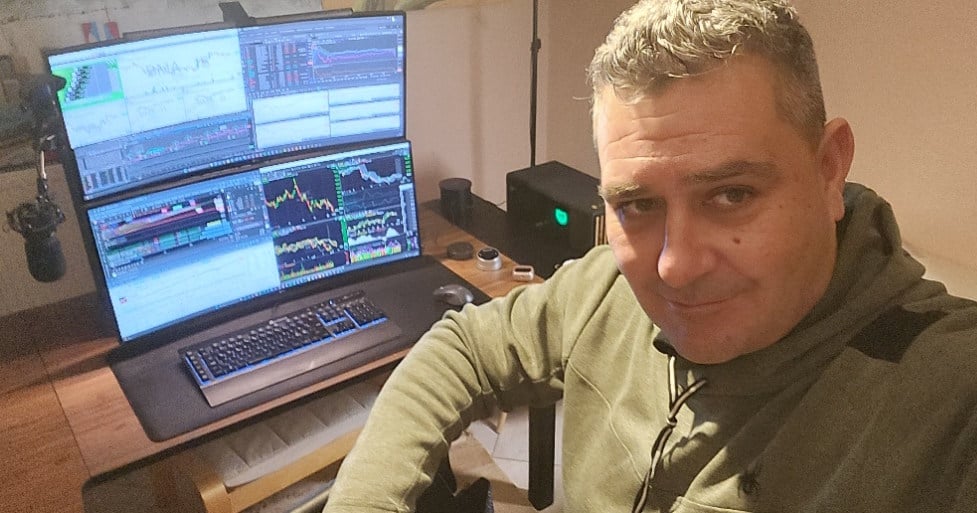
| Component | Specification | Audit Role |
| Processor | AMD Ryzen 9 7900X3D (12-Core) | Handles Pine Script calculations and high-speed data parsing with 3D V-Cache. |
| Memory | 32GB DDR5 RAM | Provides the headroom needed for 50+ open Chrome tabs and background data feeds. |
| Graphics | NVIDIA RTX 4080 Super (16GB VRAM) | Drives 10+ million pixels across dual ultrawides without frame drops. |
| Storage | NVMe Gen4 SSD | Ensures near-instantaneous application launch and local cache access. |
| OS | Windows 11 Pro | The current standard for stability and multi-window management. |
| Display | 2x LG Ultrawide 34″ Curved | Provides the “Command Center” view required for multi-monitor sync tests. |
Previous Testing Methodologies 🡳
How We Test Trading Tools v.1 – 2024
How We Test Trading Tools v.2 – 2025
Document Updates 🡳
04/03/2026 – Added an improved reference to category winners for each section.
20/07/2026 – Updated to remove TradingView from side-by-side comparisons.
02/09/2026 – Updated title and links to new lab test locations.
