
How much risk can you really handle? That’s the question at the heart of smart investing.
Risk tolerance is the level of uncertainty you’re willing to accept to pursue financial growth. It shapes every investment decision you make—from picking stocks to balancing your portfolio. And honestly, knowing your tolerance helps you stay steady when markets get wild.

You don’t have to chase every hot stock or run from every dip. It’s about building a strategy that fits your comfort zone and your timeline.
Tools like Stock Rover let you analyze your portfolio and check if it matches your goals before you make your next move.
Your investing style comes from self-awareness as much as market knowledge.
Once you know your risk tolerance, you can actually pick investments that fit—not fight—your financial personality.
Key Takeaways
- Risk tolerance sets the boundaries for how much investment risk you’ll accept.
- Your goals, time frame, and emotions all play a role.
- Matching your investing style to your comfort zone helps you stick with it for the long haul.
Risk Tolerance in Investing
Your willingness and ability to handle investment risk drive how you build and manage your portfolio.
Getting this balance right helps you pick suitable assets, avoid knee-jerk reactions, and set realistic long-term goals.
Risk tolerance shows how much uncertainty in investment returns you’ll accept before you lose faith in your plan.
It’s part emotional, part financial.
Think of it as your personal volatility meter—how much loss or swing you can handle before you want to bail or change course.
If you’ve got a high tolerance, you’ll accept short-term losses for a shot at bigger long-term gains.
Lower tolerance? You’ll probably stick with stable options like government bonds or money market funds.
Several factors shape your risk tolerance:
- Time horizon – More years to invest means more time to recover.
- Income stability – Consistent paychecks make risk-taking easier.
- Experience – If you’ve seen some market cycles, volatility feels less scary.
- Personality – Some folks just sleep better with steady results.
Stock Rover and similar tools let you try out different portfolio mixes and see how they might play out before you commit real money.
Types of Risk Tolerance: Aggressive, Moderate, Conservative
Most people fall into one of three risk tolerance buckets: aggressive, moderate, or conservative.
Each one lines up with a different asset mix and set of goals.
| Type | Typical Asset Mix | Key Traits | Example Approach |
|---|---|---|---|
| Aggressive | 80–100% equities | Chases growth, handles big swings | Leans into small-cap or emerging market stocks |
| Moderate | 50–70% equities | Tries to balance growth and stability | Mixes index funds with bonds |
| Conservative | 0–40% equities | Wants to protect capital | Focuses on fixed income and cash |
Aggressive investors usually have long time horizons and a strong belief that markets will bounce back.
Conservative investors want steady returns and easy access to cash.
Moderate investors? They’re somewhere in the middle and might shift as their goals or life situation change.
Check your category by looking at how your portfolio did during rough patches.
If you found yourself stressed or losing sleep, your allocation might be too risky for your real comfort.
Investment Risk Versus Risk Capacity
Investment risk is just the chance that an asset’s value will swing or drop.
Risk capacity is about how much loss you can actually afford without messing up your plans.
You need both to line up with your risk tolerance, or you’ll end up overexposed.
If you’re close to retirement, your capacity for risk drops because you’ll need that money soon.
Younger investors usually have more capacity since they’ve got time to recover from downturns.
Balancing these factors helps you avoid ending up in aggressive positions when your finances can’t take a hit.
Platforms like TrendSpider let you analyze market trends and see how different volatility levels could affect your holdings.
When your tolerance, capacity, and risk exposure all match up, you’ll probably invest with more discipline and less emotional drama.
Key Factors That Shape Your Risk Tolerance
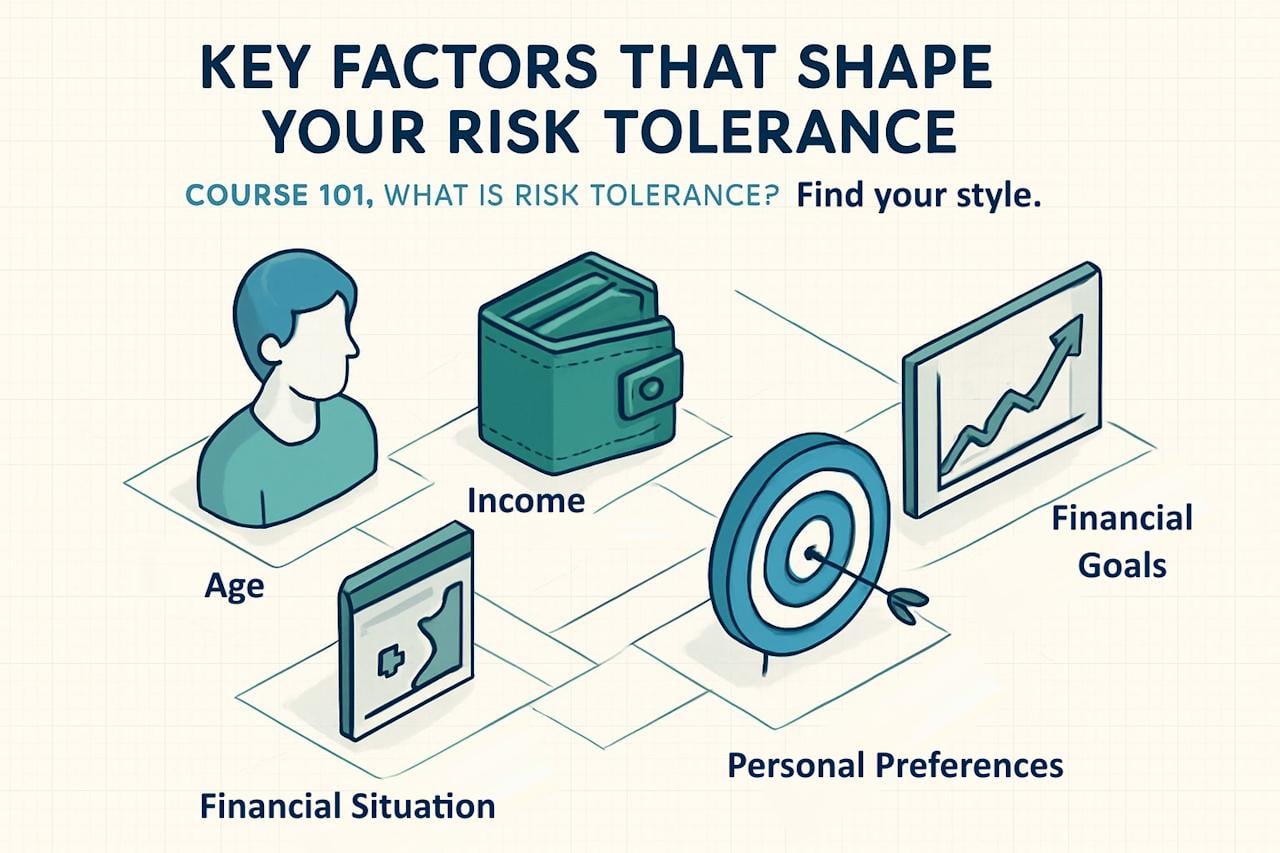
Your willingness to take investment risk depends on both the numbers and your behavior.
Factors include your investing timeline, financial stability, comfort with uncertainty, and what you actually want your money to do.
Time Horizon and Age
Your time horizon sets the tone for your risk level.
If you’ve got decades before you need the money, you can ride out more ups and downs.
Younger investors usually accept more volatility because compounding works in their favor over time.
As you get closer to retirement or a big expense, your tolerance typically drops.
Shorter horizons mean less time to recover, so things like bonds or dividend stocks start looking better.
Stock Rover can show you historical drawdowns and recovery times across asset classes.
Seeing how long different investments took to bounce back helps you match risk to your timeline.
Financial Situation and Capacity
Your financial situation—how steady your income is, how much you save, your debt, and your net worth—sets your capacity for risk.
If you’ve got a reliable income or a big emergency fund, you can ride out riskier assets during downturns.
But if money’s tight or your job feels shaky, even mild volatility can create stress or force you to cash out early.
That’s a sign your capacity is low, no matter how comfortable you think you are with risk.
Try checking these ratios:
- Emergency savings: 3–6 months of expenses
- Debt-to-income: under 30% is ideal
- Portfolio liquidity: can you get cash in 3–5 days?
Balancing these numbers helps you decide if you’re in a position to chase growth or if you should play it safer.
Emotional Responses and Decision-Making
How you react emotionally to market swings usually tells you more about your risk tolerance than any quiz.
If you panic-sell during drops or jump into rallies, your real tolerance might be lower than you thought.
Behavioral biases like loss aversion, overconfidence, or following the crowd can really mess with your decisions.
Keeping a trading journal or using a simulated portfolio helps you spot these patterns.
Platforms like TradingView let you test strategies and watch real-time charts without risking actual money.
Practicing this way helps you manage your emotions before you put real cash on the line.
The goal? Make decisions based on data, not just fear or hype.
Financial Goals and Investment Objectives
Your financial goals give your investments a purpose.
Saving for retirement, buying a house, or covering education all come with different timelines and return needs.
Matching your portfolio to these goals means you only take the risk you actually need.
Short-term goals usually call for keeping your capital safe, while long-term goals can handle more volatility.
Assign each goal a target amount, a time frame, and a risk range you’re okay with.
Here’s a quick table to help clarify:
| Goal | Time Horizon | Target Return | Risk Level |
|---|---|---|---|
| Retirement | 25 years | 6–8% | Moderate–High |
| Home purchase | 5 years | 2–4% | Low |
| Emergency fund | Ongoing | 0–2% | Minimal |
Lining up your investments with specific goals keeps your strategy focused and trackable.
How to Measure and Assess Your Risk Tolerance
You can figure out your risk comfort level with structured tools, some honest self-reflection, and maybe help from a pro.
Each approach helps you see how much volatility and potential loss you can actually stomach before you start making rash decisions.
Self-Assessment: Questions to Ask Yourself
You can dig deeper into your risk tolerance by asking yourself a few key questions:
- How would I feel if my portfolio dropped 15% in a month?
- How long am I willing to leave money invested during a downturn?
- Am I after growth, income, or just keeping my capital safe?
- How secure is my income or emergency fund?
Jot down your answers in a table or checklist to spot any trends.
| Factor | Low Tolerance | High Tolerance |
|---|---|---|
| Reaction to loss | Sell quickly | Hold or buy more |
| Investment horizon | Under 3 years | Over 10 years |
| Income stability | Irregular | Stable |
Your responses will show if you lean more defensive or toward growth-oriented strategies.
Check in on these answers each year or after big life changes.
Role of Financial Advisors and Planners
A financial advisor or planner can help interpret your quiz and self-assessment results in the bigger picture.
They’ll compare your answers with your goals, tax situation, and need for liquidity.
Advisors often use their own risk profiling tools and adjust their guidance as your situation shifts.
You can ask for scenario analysis—how your portfolio might perform in different market conditions.
Some advisors use platforms like TradingView to show you volatility and test allocation ideas visually.
Professional advice helps you balance comfort with long-term returns.
Look for advisors who explain their methods and how they get paid.
Bring your quiz results and your own questions to get the most out of the conversation.
Applying Risk Tolerance to Your Investing Style
Your risk tolerance decides how you pick investments, weigh potential returns, and react to market swings.
It guides your portfolio structure and tells you how much volatility you can really live with before you want to change course.
Building Your Investment Portfolio
Start by laying out your investment goals, your timeline, and how much loss you’re comfortable with.
A short-term goal, like saving for a house, usually means sticking with safer assets like bonds or cash.
Long-term goals, like retirement, can handle more stocks since you’ve got time to recover from dips.
Use a checklist to line up your portfolio with your tolerance:
- Conservative: 70–80% bonds, 20–30% stocks
- Moderate: 50–60% stocks, 40–50% bonds
- Aggressive: 80–90% stocks, 10–20% bonds
Keep your investments spread out across industries and regions to lower the risk of one area tanking your whole portfolio.
Stock Rover can help you filter for funds or stocks that actually match your risk and return targets.
Review your allocations once or twice a year to make sure they still fit your goals and comfort level.
Asset Allocation and Diversification
Asset allocation means spreading your money across different asset classes—stocks, bonds, cash—to balance risk and reward.
Diversification means spreading your bets within each class so a bad run in one area doesn’t wipe you out.
Together, these strategies help protect your portfolio from single-point failures.
A balanced portfolio might look like this:
| Asset Class | Typical Range | Risk Level | Purpose |
|---|---|---|---|
| Stocks | 40–80% | High | Growth potential |
| Bonds | 20–50% | Moderate | Income and stability |
| Cash/Short-term | 0–10% | Low | Liquidity buffer |
When one asset class drifts by 5–10% from its target, it’s time to rebalance.
That keeps your portfolio in line with your risk tolerance and your view of the market.
Check out platforms like Seeking Alpha for research and peer analysis before you make changes to your allocation.
Adapting to Market Volatility
Market volatility can push your nerves and your wallet. Big swings might make you want to bail out too soon or stubbornly hang on. Instead, stick to your plan and rebalance only when it actually makes sense—not just because prices jump around.
Watch volatility indicators like the VIX or keep an eye on sector trends. With charting tools like TrendSpider, you can set up automated alerts for technical signals that fit your risk comfort.
If your time horizon is long enough, try to stay in the market. Short-term drops usually bounce back, but panic selling just locks in losses. Only change your allocation if your own goals or finances shift.
Investment Choices for Different Risk Profiles
Your mix of investments depends on how much uncertainty you’re willing to take on and how long you’ll leave your money in. Every asset class comes with its own risk and reward, so matching them to your comfort level helps you keep your cool when things get rough.
Stocks, Bonds, and CDs
Stocks give you ownership in a company. They’re more volatile, but over time, they can offer higher returns. If you can stomach the swings, they’re worth considering. You can dig into company fundamentals with tools like Stock Rover—compare earnings, debt, and valuations before making a move.
Bonds let you lend money to governments or companies. They pay interest, usually jump around less than stocks, and higher-rated bonds are steadier but pay less. If you go for lower-rated (high-yield) bonds, you’ll get more risk along with the higher yield.
Certificates of Deposit (CDs) pay a fixed rate and protect your principal if you hold them to maturity. They work for short-term goals, or if you want to keep risk low. You can ladder CDs to keep some flexibility while still earning better rates.
Mixing these assets in different amounts helps you balance growth with safety.
Conservative Versus Aggressive Investors
A conservative investor cares most about keeping their money safe and earning a steady income. They might put 60–80% in bonds or CDs, with just a bit in dividend stocks. You won’t beat inflation every year, but you’ll probably avoid big losses when markets fall.
An aggressive investor is after higher growth and can handle bigger ups and downs. They might go 80–100% equities, including small-cap or international stocks. You can use TradingView to watch price trends and momentum before jumping in.
A moderate investor mixes both styles, maybe with a 60/40 stock-to-bond split. This cushions you from big drops but still gives you a shot at growth. Adjust your mix as your goals, income, or nerves change.
Balancing Rate of Return and Financial Loss
Every investment choice means trading off between the rate of return and the chance of financial loss. Higher returns almost always come with more volatility. A diversified portfolio spreads your risk across assets, industries, and regions so one bad move doesn’t ruin everything.
Here’s a quick visual:
| Risk Profile | Typical Allocation | Goal | Expected Volatility |
|---|---|---|---|
| Conservative | 20% stocks / 80% bonds & CDs | Capital preservation | Low |
| Moderate | 60% stocks / 40% bonds | Balanced growth | Medium |
| Aggressive | 90% stocks / 10% bonds | Maximum growth | High |
Check your allocation every year to make sure it still matches your goals and how much loss you’re willing to bear.
Managing Risk Tolerance Over Time
Your comfort with risk changes as your money, goals, and the market shift. Tracking those changes helps you keep your investments in line with what matters to you, stay disciplined, and protect long-term wealth from inflation and knee-jerk decisions.
Adjusting for Life Changes and New Goals
Big life events—getting married, buying a house, or heading toward retirement—can completely change your risk tolerance. A new investment goal might mean you need to accept more or less volatility.
Keep a checklist handy for when to review:
- Income changes (raise, layoff, business boom)
- Family milestones (kids, school costs, retirement)
- Market conditions (rate hikes, inflation spikes)
Each of these affects how much risk you can actually take on versus how much you want to. Saving for something soon? You’ll probably need to dial down the risk. If your goal is far off, you might stick with more stocks.
Tools like Stock Rover let you try out different mixes and see how portfolio changes could impact your returns. Aim to review your allocation at least annually or after any major life or financial change.
Reviewing Your Financial Plan Regularly
A financial plan won’t stay perfect forever. Inflation, market cycles, and tax changes all shift your real returns and can throw you off track.
Set up a regular check-in—quarterly or twice a year—to compare your portfolio to your target mix. Look for:
- Asset weights drifting more than 5–10%
- Positions or sectors that keep lagging
- Changes in cash flow or debts
Platforms like TradingView help you see your portfolio’s performance across markets and currencies. This makes it easier to spot if your risk is still in the right zone. If things drift, rebalance to get back on course and avoid emotional reactions to short-term moves.
Staying Focused on Long-Term Wealth
Short-term market swings can really mess with your head. But sticking to your plan through the bumps usually beats trying to jump in and out at the right time.
Focus on your real progress toward your investment goals—not what the market did yesterday. Compare your results to long-term benchmarks like inflation-adjusted returns or a broad index.
If you catch yourself reacting to every headline, try automating your contributions or rebalancing. Let tools like TrendSpider handle alerts and technical analysis, so you’re acting on data, not panic.
Be patient, check your results once a year, and let your plan—not the latest market drama—drive your choices.
FAQ
How can you define your personal risk tolerance level?
Risk tolerance is the amount of investment loss you can take before you’d ditch your plan. It’s a mix of your financial ability to handle risk and your emotional reaction to ups and downs. Figure it out by looking at your time horizon, income stability, and how you responded to past market drops.
What are the key differences between risk tolerance and risk appetite?
Risk tolerance is what you can realistically handle; risk appetite is what you want to take on. Tolerance comes from your financial situation, while appetite is all about attitude. You might love risk in theory, but if your budget or goals can’t handle big losses, your true tolerance is lower.
Can you give an example of risk tolerance in the context of investing?
If you keep your diversified stock portfolio through a 15% market dip, you’re showing moderate to high risk tolerance. If you sell at the first sign of trouble, your tolerance is probably low. TradingView lets you see how different portfolios react to market moves.
What are the main categories of risk to consider when assessing risk tolerance?
You’ll want to look at market risk, inflation risk, interest rate risk, and liquidity risk.
Market risk means prices can swing—sometimes wildly.
Inflation risk eats away at your money’s value as the years go by.
If you’re not careful, interest rate risk can hit your investments whenever rates shift.
Liquidity risk? That’s when you can’t sell quickly without taking a loss.
Lesson Review Questions
1. What is risk tolerance, and why is it important when buying stocks?
Risk tolerance is the amount of volatility and potential loss you can accept without panicking or abandoning your plan. It matters because your stock choices, position sizes, and holding periods must match how much fluctuation you can realistically handle, otherwise you are likely to sell at the worst possible time.
2. Which personal factors most strongly influence an investor’s risk tolerance?
Key factors include your time horizon, income stability, total wealth, investment experience, personality, and emotional response to losses. A long time horizon and secure income usually allow for higher risk tolerance, while a short horizon, limited savings, or strong loss aversion point to a lower risk tolerance.
3. How does time horizon affect the mix of aggressive and conservative investments you should hold?
If you have many years before you need the money, you can usually afford more aggressive investments such as growth stocks, because short-term downturns have time to recover. If you need the funds in only a few years, you typically shift toward more conservative holdings like blue-chip dividend stocks, bonds, or cash equivalents to protect capital.
4. What are some warning signs that your current portfolio does not match your true risk tolerance?
Warning signs include losing sleep over market moves, checking prices obsessively, feeling sick or panicked during normal corrections, or repeatedly selling after big drops and buying back only after prices recover. These behaviors suggest your positions are too aggressive for your comfort level.
5. How can diversification help an investor stay within their risk tolerance?
Diversification spreads investments across many stocks, sectors, and asset classes, so no single holding can severely damage your total portfolio. This tends to reduce volatility and drawdowns, making it easier for you to stay invested and stick to your plan without emotional overreactions.
6. What practical steps can you take to align your stock buying with your risk tolerance?
Practical steps include completing a risk-tolerance questionnaire, defining your time horizon and goals, setting target percentages for aggressive versus conservative assets, limiting position size in any single stock, and rebalancing periodically. Writing these rules down as part of an investment plan helps you follow them even when markets are volatile.