
Buying your first stock doesn’t need to feel overwhelming. You just need a plan, a funded brokerage account, and a few thoughtful choices in the right order.
To buy stocks for the first time, open a brokerage account, add funds, pick a company or fund that matches your goals, and place your first order.
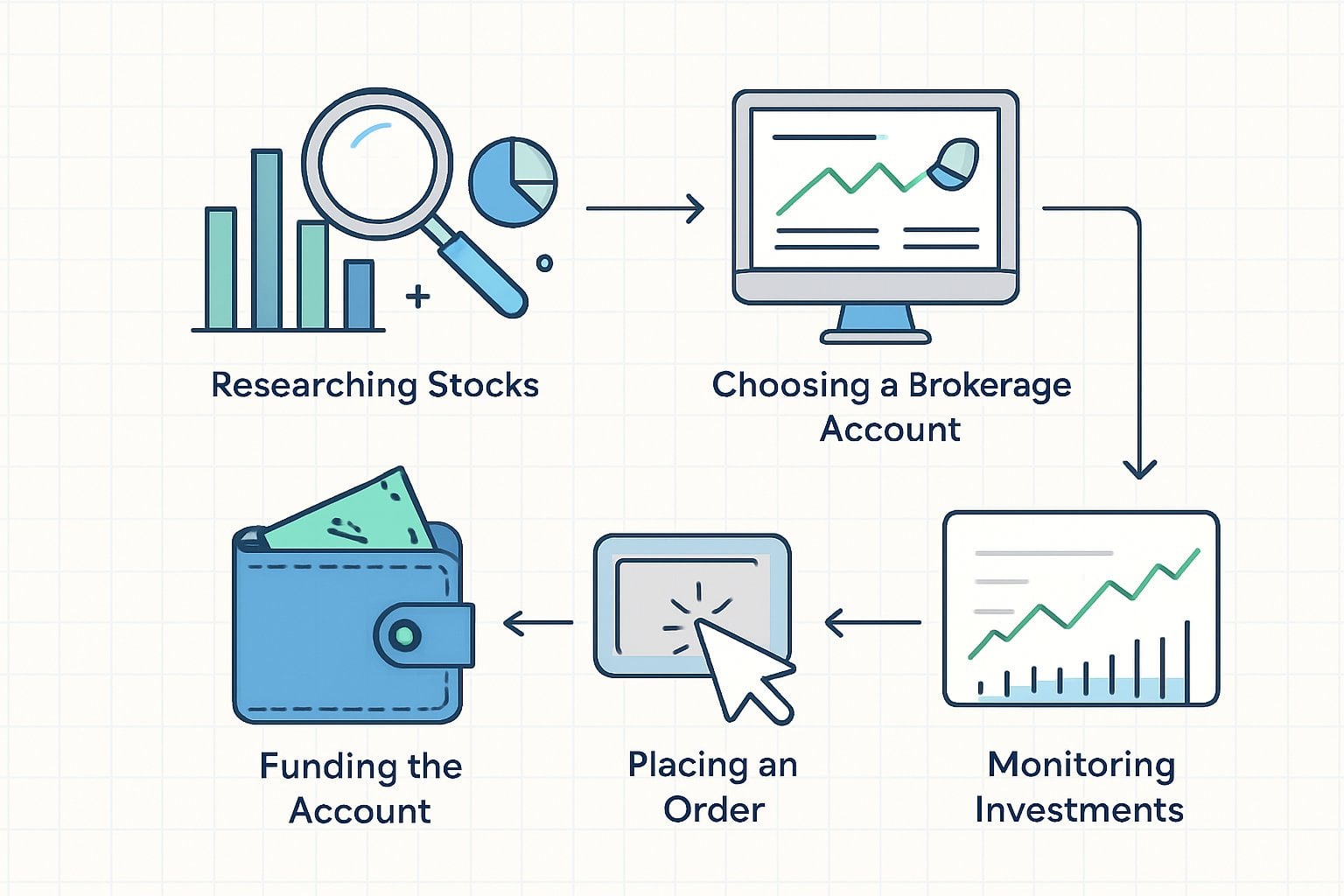
You’ll get to see how the market works, what makes a stock worth your attention, and ways to sidestep common beginner mistakes. Tools like Stock Rover let you compare companies, screen for value, and keep tabs on performance—so you don’t have to rely on gut feelings.
Every step builds your confidence and helps you stick to facts over emotion.
Key Takeaways
- Learn how stocks and the market function before you invest
- Follow a straightforward process to open, fund, and use a brokerage account
- Build and manage a portfolio that matches your financial goals
What Is a Stock and How Does the Stock Market Work?
A stock is a unit of ownership in a company, and the stock market is the system where these ownership units change hands. If you understand both, you can spot investment opportunities, manage risk, and make better decisions about buying or selling shares.
Defining Stocks and Shares
A stock gives you a claim on a company’s assets and earnings. When you buy a share, you actually own a small slice of that business. Companies issue two main types: common stock (usually with voting rights) and preferred stock (pays fixed dividends, but often skips voting power).
Each share’s price reflects what investors expect from future profits. Prices move as buyers and sellers react to company results, economic news, or just market mood. If a company reports strong earnings, demand for its shares might jump, pushing the price up.
You can track real-time data and price swings using platforms like TradingView, which offers plenty of charting tools and covers international markets. This lets you watch how stocks behave under different conditions before you put your money on the line.
How Stock Markets Operate
The stock market isn’t just one place—it’s a network of exchanges where buyers and sellers meet. The New York Stock Exchange (NYSE) and Nasdaq are two big names. Each exchange lists companies that meet certain financial and reporting requirements.
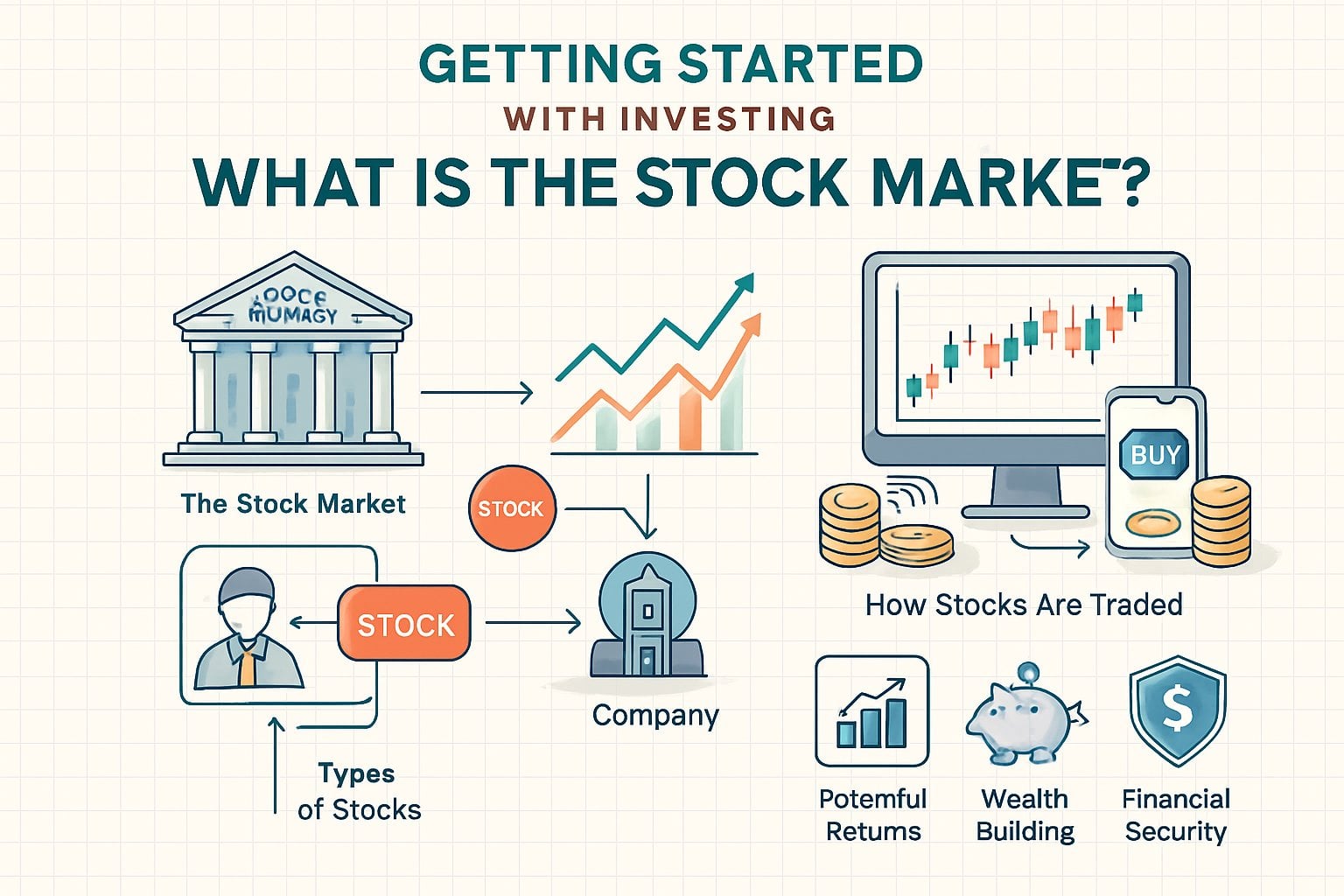
When you want to buy or sell, your broker connects your order to the exchange. Electronic trading matches orders in milliseconds now. Strict regulations aim to keep things fair and transparent.
Stock prices never stand still—supply and demand keep them moving. Analysts often turn to tools like TrendSpider to automate chart analysis and spot price patterns. If you understand how orders, liquidity, and volatility interact, you can time your trades better and avoid snap decisions.
Why Companies Issue Stocks
Companies issue stocks to raise money for growth without piling on debt. When they sell shares to the public, they get funds to expand, build new products, or pay off old loans. Shareholders, in return, get a shot at dividends and price gains if the company does well.
Spreading ownership among many investors reduces reliance on just a few lenders. Of course, it also means giving up some control, since shareholders get voting rights. Companies weigh these pros and cons before deciding how much equity to offer.
You can use research tools like Stock Rover to analyze financial statements and screen for companies with solid fundamentals. This helps you find businesses that put their raised capital to good use and stay profitable.
Preparing to Buy Stocks: Key Steps Before You Invest
Before you buy your first stock, check that your finances are stable, your risk level is clear, and your goals make sense. These steps help you avoid emotional moves and keep your investments in line with your long-term goals.
Assessing Your Financial Readiness
Start by looking at your budget, debt, and emergency savings. You’ll want at least three to six months of living expenses set aside before investing. Pay off high-interest debt—especially credit cards—since that usually beats most stock returns.
Check your cash flow. Only invest money you don’t need for short-term expenses. Investing works best if you can leave funds untouched for years.
| Financial Check | Target Benchmark |
|---|---|
| Emergency Fund | 3–6 months of expenses |
| High-Interest Debt | Paid off or under control |
| Disposable Income | Consistent monthly surplus |
Once your finances are in order, use tools like Stock Rover to analyze companies. It helps you compare balance sheets and screen for stocks that fit your risk and return needs.
Understanding Risk Tolerance
Risk tolerance is about how much market swing you can handle without panicking. It depends on your time horizon, income stability, and how comfortable you are with losses. A 25-year-old saving for retirement can usually handle more ups and downs than someone close to retiring.
Think about both risk capacity (what you can afford to lose) and risk attitude (how much you can stomach). If a 10% drop keeps you up at night, you might stick to index funds or dividend stocks instead of high-flyers.
You can test your risk tolerance with online quizzes or by tracking demo portfolios. TradingView lets you simulate trades and see how different assets react before you risk real money.
Setting Investment Goals
Set clear, specific goals for your investments. Your goals guide your time frame and asset mix. If you’re saving for a home in five years, you’ll invest differently than if you’re building retirement wealth over 30.
Write down measurable targets—something like “invest $500 monthly for 10 years to reach $100,000.” This keeps you accountable and helps you track progress.
Match each goal to a strategy:
- Short-term (1–3 years): Conservative, high-liquidity assets.
- Medium-term (3–10 years): Balanced mix of stocks and bonds.
- Long-term (10+ years): Growth-focused stock portfolio.
Check your goals every year. Update them if your income, expenses, or priorities shift so your investing plan keeps up with your life.
Opening and Funding a Brokerage Account

Choosing the Right Brokerage
Start by comparing fees, platforms, and tools. Look for brokers with low trading commissions, clear account fees, and decent customer support. Here’s a quick checklist:
| Feature | Why It Matters | Example |
|---|---|---|
| Commissions | Affects long-term returns | $0 stock trades save costs |
| Platform Tools | Supports research and order execution | Stock Rover offers deep stock screening |
| Minimum Deposit | Impacts accessibility | Some brokers require $0 to start |
Think about how you’ll trade. If you invest monthly, you’ll care more about automation and low-cost ETFs than fancy charting. If you trade often, fast execution and data tools like TrendSpider or MetaStock matter more.
Check the regulation and account protection. U.S. brokers should register with FINRA and SIPC, which covers up to $500,000 in securities. If you’re outside the U.S., verify the local equivalent.
Account Types Explained
Brokerage accounts come in two main flavors: cash and margin.
A cash account makes you pay in full for each trade—lower risk, no borrowing costs.
A margin account lets you borrow from your broker to buy more, which can boost gains but also losses.
Tax treatment varies. Taxable brokerage accounts are flexible—you can withdraw anytime, but pay capital gains tax on profits.
Retirement accounts (like IRAs) offer tax perks but restrict withdrawals.
Some brokers offer special accounts for minors, trusts, or joint owners. Pick the one that fits your goals and how you’ll access funds.
When comparing, look at account protection, interest on idle cash, and how well it integrates with your bank.
How to Fund Your Account
Once you’re approved, link your bank account to transfer funds. Most brokers use ACH transfers (free, but takes a few days). Wire transfers are faster but usually cost $10–$25.
Watch for deposit limits. Some brokers set a minimum—often $0 to $2,000 for margin accounts.
Only move into what you can afford to invest. Keep your emergency fund somewhere else. Many people start with a small deposit to test the platform before adding more.
You can set up automatic deposits for consistency. Always check your broker’s dashboard to make sure your funds are available before you place your first trade.
How to Buy Stocks: Step-by-Step Process
You’ll buy stocks by placing an order through your brokerage platform, deciding how your trade should execute, and picking how many shares you want. You’ll need to understand order types, share quantities, and how prices move in real time.
Placing Your First Stock Order
Log in to your brokerage account and search for the company’s ticker symbol. Double-check the company name and the current price before you do anything. Decide how many shares you want and how much you’re willing to invest.
Most brokers show a simple trade ticket. Enter the number of shares, order type, and whether you’re buying or selling. Always review the estimated cost and any commission fees before you hit submit.
For research, use Stock Rover to compare things like revenue growth and debt ratios. This helps you decide if the stock fits your plan. When you place the order, your broker executes it as you instruct—sometimes instantly, sometimes after your price is met.
Order Types and Execution
Order type shapes how your trade gets filled. A market order buys at the next available price—fast, but not always the best price. A limit order lets you set the highest price you’ll pay, which can protect you from big swings.
Use a stop order or stop-limit order to manage risk. These kick in when the stock hits a certain price, so you can limit losses or lock in a gain. Each order type balances speed and price certainty a bit differently.
Timing matters, too. Orders you place outside regular trading hours might fill at different prices when markets open. If you’re trading short-term, tools like TrendSpider can automate chart analysis and flag entry points based on technical signals. Always double-check your order before confirming.
Fractional Shares and Minimums
Fractional shares let you buy less than one full share, so you can get started in stocks even if you only have a few bucks. Plenty of brokers now let you invest with as little as $1.
This makes it easier to diversify without needing a big pile of cash upfront. Fractional investing works especially well for expensive stocks where a single share might cost hundreds of dollars.
You’ll still get your portion of dividends and voting rights, just scaled to the size of your holding. Keep in mind, though—moving fractional shares between brokers can be tricky or flat-out impossible sometimes.
Check your broker’s policy on fractional trading and how they handle dividend reinvestment. If you’d rather own whole shares, you can plan your buys around round numbers or set up recurring investments to build your position over time. Fractional shares let you keep investing consistently, even when you’re not sitting on a big savings stash.
Building and Managing Your Stock Portfolio
You want a portfolio that balances growth potential and risk. Allocate across different asset types, track your numbers, and make changes when the market—or your own situation—shifts.
Diversification Strategies
Diversification spreads your risk across sectors, industries, and regions. That way, if one stock or market tanks, your total return doesn’t get wrecked.
A balanced portfolio might include large-cap, mid-cap, and international stocks, plus ETFs or index funds for broader coverage.
You can split things up by sector (like tech, healthcare, or finance), asset class (stocks, bonds, cash), or region (U.S., Europe, Asia). Don’t let any single stock balloon to more than 5–10% of your total portfolio.
Use tools like Stock Rover to compare company fundamentals, earnings growth, and valuation before you buy. This helps you spot overlap and avoid stacking too much risk in one spot.
Here’s a quick checklist:
- Hold at least 10–15 individual stocks or diversified funds.
- Mix in growth and dividend-paying companies.
- Revisit your allocations every year or whenever your goals change.
Monitoring Performance
Measure your performance against a benchmark, like the S&P 500 or a sector index. This shows if you’re on track or drifting off course.
Check in quarterly or twice a year. Focus on total return—that’s price gains plus dividends—not just daily price swings.
Look at metrics like earnings per share (EPS) growth, price-to-earnings (P/E) ratio, and return on equity (ROE) to see if your companies are healthy.
Platforms like TradingView let you chart trends, compare stocks, and track global markets live. Set up alerts for high price or volume moves.
Ask yourself these three things each time you review:
- Does each stock still fit my investment plan?
- Did the fundamentals or earnings guidance change?
- Is the performance good enough to keep, or should I trim it?
Rebalancing and Exiting Positions
Rebalancing gets your portfolio back to target after markets shift things around. If stocks run hot, sell a little and move money to bonds or cash to keep your risk in check.
Set your triggers—either by time (every 6 or 12 months) or by drift (if an asset class moves 5% or more from your target).
When you exit a stock, use clear criteria. Sell if a company’s earnings drop, the valuation gets too high, or your original reason for buying no longer makes sense. Don’t let emotions drive your decisions during rough patches.
Tools like TrendSpider can automate technical analysis and flag momentum changes that might signal an exit. Make a note of each trade so you can look back and tweak your strategy later.
Essential Tips and Techniques for First-Time Stock Buyers
You need to know how short-term trading differs from long-term investing, how to read price charts, and how to dodge rookie mistakes that cost real money. Stick to clear strategies, set measurable goals, and keep your cool—don’t let hype or panic steer you.
Trading vs. Investing Approaches
Trading is all about short-term moves. You’ll buy and sell stocks over days or weeks, aiming for quick profits. This takes constant attention, fast decisions, and tools with real-time data like MetaStock or Benzinga Pro.
Investing is for the long haul. You buy shares in solid companies and hold for years, hoping to benefit from their growth and compounding returns. It’s a better fit if you want stability and lower fees.
| Approach | Time Horizon | Focus | Tools |
|---|---|---|---|
| Trading | Days to weeks | Price action, volatility | MetaStock, Trade Ideas |
| Investing | Years | Fundamentals, dividends | Stock Rover, Seeking Alpha |
Pick trading if you can watch the markets every day and stomach more risk. Go with investing if you want steady growth and can stay patient.
Basics of Technical Analysis
Technical analysis means looking at price patterns and trading volume to spot possible buy or sell points. You’ll use charts, moving averages, and trendlines to time your trades.
Start with the basics: the 50-day and 200-day moving averages. If the short-term line crosses above the long-term one, that’s usually a bullish sign. Check for support and resistance levels to confirm what you’re seeing.
Try charting platforms like TrendSpider for automated pattern spotting and backtesting. Don’t clutter your screen with every indicator out there—pick a few that work and test them with historical data before using them live.
Common Pitfalls to Avoid
A lot of new investors chase hype or buy on emotion. Don’t grab stocks just because they’re trending or spiking. Always check the fundamentals—revenue growth, debt, and valuation—before you put money down.
Overtrading is a common trap. Too many trades mean more fees and taxes, which eat into your returns. Stick to your plan and set clear entry and exit rules.
Never risk money you can’t afford to lose. Use stop-loss orders to protect yourself on the downside. Review your trades every month and track your results with tools like Stock Rover to keep improving.
Lesson Review Questions
1. What is the difference between placing a market order and a limit order?
A market order executes immediately at the best available price, focusing on speed rather than price control. A limit order allows you to specify the maximum you are willing to pay when buying or the minimum you will accept when selling, giving you full price control but no guarantee of execution.
2. Why is it important to understand the bid–ask spread when buying stocks?
The bid–ask spread represents the difference between what buyers will pay and what sellers want. A wide spread can increase your trading cost, especially in illiquid stocks. Understanding it helps you avoid overpaying and informs whether a market or limit order is more appropriate.
3. What role does a brokerage account play in buying stocks?
A brokerage account acts as your connection to the stock market. It allows you to deposit money, place buy and sell orders, and hold your investments. Different brokers vary in fees, tools, order types, and market access, so choosing the right one is essential for executing your strategy efficiently.
4. How can diversification reduce risk when building a stock portfolio?
Diversification spreads your investments across multiple companies, industries, and asset types. This reduces the impact of a single stock performing poorly and helps stabilize your overall returns. It is one of the most effective risk-management tools available to investors.
5. Why should investors pay attention to fees and commissions when buying stocks?
Even small trading fees can erode returns over time, especially for frequent traders. Understanding commissions, spreads, and account fees helps you allocate money more efficiently and choose a broker that supports your investing style without unnecessary costs.
6. What factors should you consider before deciding how many shares to buy?
You should consider your risk tolerance, portfolio size, diversification goals, stock volatility, and position sizing rules. Buying too much of a single stock increases risk, while buying too little can limit meaningful impact on long-term returns. Good position sizing aligns your purchase with your broader investment plan.