
Welcome to our training course on understanding the stock markets. In this course, we will cover a range of topics that will help you better understand how the stock markets work.
We will start by looking at the different types of stock markets and how they have grown in recent years. We will then compare the global stock markets and examine their main differences.
We will also examine the boom and bust cycles that often occur in the stock market and learn how to profit from them.
Finally, we will explore some key principles of fundamental analysis and show you how to use research reports to make informed investment decisions. By the end of this course, you should understand the stock market and how it works.
-
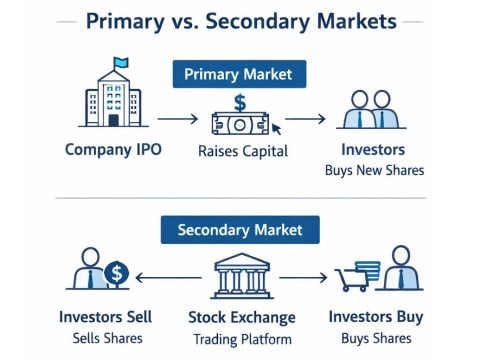
102-01 Understanding Stock Markets, Locations & Financial Wealth
In order to understand the global stock markets, you need to know a few things about their size, locations, and countries. You first need to know that the stock market is huge. There are billions of stocks traded on any given day, and the total value of all those stocks is trillions of dollars.
-

102-02 The World’s Stock Markets: How They Work & Where They Are
When people say “the stock market,” they often imagine a single place—usually New York—where stocks move up and down all day. In reality, the stock market is a global network of venues where ownership in companies is bought and sold. Understanding that global structure is a big step toward becoming a confident investor, because it…
-

102-03 The Fastest Growing Stock Markets
When beginners hear “fastest-growing stock markets,” they often imagine a list of countries to chase for quick profits. That’s not the right mindset. A fast-growing market can be a powerful long-term wealth engine—but it can also be volatile, concentrated, or driven by one exceptional decade that may not repeat. In this lesson, we’ll build a…
-
102-04 The Global Stock Markets Compared
When you’re new to investing, the stock market can feel like one giant machine that goes up or down for mysterious reasons. But once you zoom out, you see something more useful: the world has many stock markets, and they share patterns—but they also deliver very different long-term results. This lesson compares global markets in…
-

102-05 Global Stock Markets – Class Section Summary
Global Stock Market Analysis Section Summary In the short term, we see that markets fluctuate and show key reversals at very similar points; however, some markets significantly out-perform others and exhibit very different volatility characteristics. So there you have it, a stock market analysis of the key indexes. You may be tempted to think that…
-
102-06 Booms and Busts: Understanding Stock Market Cycles
Booms and busts are not bugs in the stock market—they’re part of how markets work. A boom-and-bust cycle is when the market experiences large increases and declines in value over time. For new investors, these swings can feel confusing or even frightening. But once you understand why booms and busts happen, you can stop reacting…
-
102-07 Profit from a Crash by Being in Cash: Beginner’s Playbook
A stock market crash feels like chaos when you’re living through it. Prices drop quickly, headlines turn scary, and it’s easy to believe that “everything is broken.” But for long-term investors, crashes can become opportunities—if you have a plan before the panic starts. This lesson explains that plan in simple terms: how to reduce damage,…
-
102-08 Stock Market 4, 10, 18 & 50-Year Cycles Explained
Stock market cycle theory is the practice of understanding economic, political, and psychological events and their impact on the stock market.
-
102-09 Build a Great Stock Trading System: A Beginner Blueprint
Building a stock trading system enables you to base your investing strategy on a logical process that has been fully tested to give you a winning edge in the market.
-
102-10 How to Trade the News Without the Whipsaw
Trading “the news” sounds straightforward: good news means buy, bad news means sell. In real markets, it rarely works that cleanly. Prices often move before the headline hits your screen, and sometimes a stock drops on “great” news or rallies on “bad” news. That’s why news trading is one of the easiest ways for beginners…
-
102-11 Beginner’s Guide to Fundamental Analysis
Fundamental analysis is the process of evaluating a business to estimate what it’s worth, then comparing that estimate to the current stock price. The purpose is simple: buy when the stock appears undervalued and avoid (or sell) when it appears overvalued. When done well, fundamental analysis shifts your mindset from “What will the price do…
-
102-12 8-Step Guide to Researching Stocks
Most of the investment banks and brokerage houses employ Stock Market Analysts. Their job is to research the firms in the industry they are allocated to assess if the companies are worth investing in.
-
102-13 Starter Guide to Stock Analyst Ratings & Agencies
Stock market rating agencies exist to simplify complexity. They analyze companies, securities, and debt instruments, then distill thousands of data points into a short opinion: buy, hold, sell, or assign a credit grade such as AAA or BB. For new investors, these ratings can feel authoritative—almost like expert verdicts. But ratings are opinions, not truths.…
-
102-14 Fundamentals: Why Do We Do Business?
Before you learn how to analyze stocks, build trading systems, or evaluate financial statements, you need to understand something more basic: Why do businesses exist in the first place? Every stock you buy represents ownership in a real company. That company is not a ticker symbol or a chart pattern. It is an organization of…
-
102-15 Understanding Financial Statements As An Investor
A financial statement is a formal document that discloses a company’s financial position and performance. Financial statements include a balance sheet, income statement, and cash flow statement.
-
102-16 The Income Statement: A Guide to Financial Performance
The income statement is also known as the profit and loss statement (P&L). This document tells us what made the company profitable or unprofitable for the given time period. It lists the revenue generated, the cost of generating that revenue, and deducts any taxes paid on that revenue. The amount of money left after expenses…
-
102-17 A Complete Guide to The Balance Sheet for Investors
A balance sheet is a financial statement showing a company’s assets, liabilities, and shareholders’ equity at a specific time. Assets are anything of value that a company owns, including cash, accounts receivable, inventory, and property. Liabilities are any debts or obligations a company owes, such as accounts payable, loans, and leases.
-
102-18 Cash Flow Statement Explained with Examples & Ratios
Cash flow is the lifeblood of a company, and the cash flow statement shows how much money was generated and spent during a given period, which makes it invaluable for investors looking to invest in a company.
-
102-19 What is Earnings per Share & Why EPS is Important?
Earnings per share is one of those core numbers that shows you how much profit a company makes for every share you own. It’s a quick way to see if a business is really generating value for shareholders, and it’s the backbone for a lot of the valuation tools investors rely on. If you want…
-
102-20 Price Earnings Ratio: A Guide to Stock Valuation
The PE Ratio is a calculation used to determine the value of a company’s stock. It stands for Price-to-Earnings and is found by dividing the stock price by the earnings per share.
-
102-21 The Difference Between Cheap Stocks & Value Stocks
Cheap stocks can be a good way to get started in the stock market. You can find cheap stocks by looking for companies that are undervalued by the market.
-
102-22 The Core Concepts of Stock Trading (Strategies & Skills)
What are the different types of stock trading? How do you learn how to trade stocks? How does stock trading work, and is it gambling?
-
102-23 Stock Price Movements: How Stock Prices Are Set and Why They Change
The difference in supply and demand is what determines stock prices. Many factors change the market supply-demand in stocks, including sales, profits, revenues, and outlook.
-
102-24 The Stock Market Trend Is Your Friend – Analysis Done Right
Understanding stock trends is what separates amateur investors from professional market analysts. A stock market trend is a mix of price direction and time. Combining time and direction enables you to correctly analyze a stock price trend.
-
102-25 How Many Stocks Should I Own for Balance & Diversification
There is no simple answer to the question “How Many Stocks Should I Own?” because it comes down to portfolio size, the effort to manage your portfolio, and your investing timeframe.
-
102-26 How long should you hold a stock?
For day traders, the time dimension is essential, minute to hours. But they are typically seeking many small gains. Investors may hold stocks for years.
-
102-27 Are Stock Market Games & Simulations Worth It?
A stock market simulation is a computerized model of the stock market that allows users to test their investment strategies. The simulations can be used to assess the potential profitability of an investment and to determine the best time to buy or sell stocks.
-
102-28 How to Trade Stocks with the Right Tools
Trading stocks is not “click buy and hope.” It’s a repeatable decision process built on three pillars: tools, rules, and risk control. When beginners struggle, it’s usually because one of those pillars is missing—often risk control. This lesson gives you a clear, real-world path to start trading stocks responsibly. You’ll learn what you actually need…
-
102-30 Stock Order Types: Using Market, Limit & Trailing Stops in Trading
Limit, market, and stop limit orders, help ensure you get the best possible stock purchase price. Stop limit, stop market, and trailing stop orders help sell your stocks for profit or limit your risk.
-
102-31 Investing Strategies: Growth, Income, Value & Day Trading Pros & Cons
Understand the pros and cons of four popular strategies: growth, income, value, and day trading. Each of these strategies has unique advantages and disadvantages, so it is important to understand what each one entails before deciding which one is right for you.
-
102-33 Stock Market Investing Course Summary
In this course, we explored the stock market as an investment option, examining the fastest-growing markets around the world and how they move in sync. We delved into boom-and-bust cycles, building effective market strategies, and trading the news. The second section covered the basics of stock analysis, including rating agencies, the balance sheet, income statement,…
-
103-13 MACD Explained: What Is MACD & How To Use It For Trading?
The MACD indicator is a technical analysis tool that is used to identify trend reversals and to measure the strength of a trend. It can be used on all time frames, from intraday to long-term charts.






Specifically, this training course covers:
- The world’s stock markets, which markets are growing the fastest, and also how they move together
- Boom and bust cycles, why do they occur
- How to build a successful stock market strategy
- How to trade the news
In the second section, we look at the fundamentals of stock analysis, including:
- Rating agencies
- The balance sheet, the income statement, and the cash flow statement
- Earnings and the P/E ratio.
In the third section, we look at:
- How the markets move
- Portfolio management and other stock market concepts.
In the final section, we show you how to manage your money practically:
- Trading terminology and how to place a trade.
- Trading strategies and some golden rules for successful trading.
Finally, we tackle the topics of using leverage and short-selling and introduce you to technical analysis.
This is a thorough guide to help you understand the important aspects of investing in securities and equities in the stock market.
I hope you enjoy the course.