
The stock market can feel intimidating to many beginners because it seems like a world of flashing quotes, complex charts, and jargon that only professionals understand.
But the reality is simpler: the stock market is a system that helps companies raise money and gives everyday people a way to participate in business growth.
If you understand a few core ideas—what a stock is, why exchanges exist, how prices move, and why the biggest markets tend to cluster in the richest regions—you’ll have a solid foundation for the rest of your investing education.
This lesson is designed for novice investors. You don’t need a finance background. Think of this as learning the “map” before you begin the journey.
What the Stock Market Really Is
A stock (also called a share) represents fractional ownership in a company. When a company “goes public,” it splits ownership into many shares that investors can buy and sell.
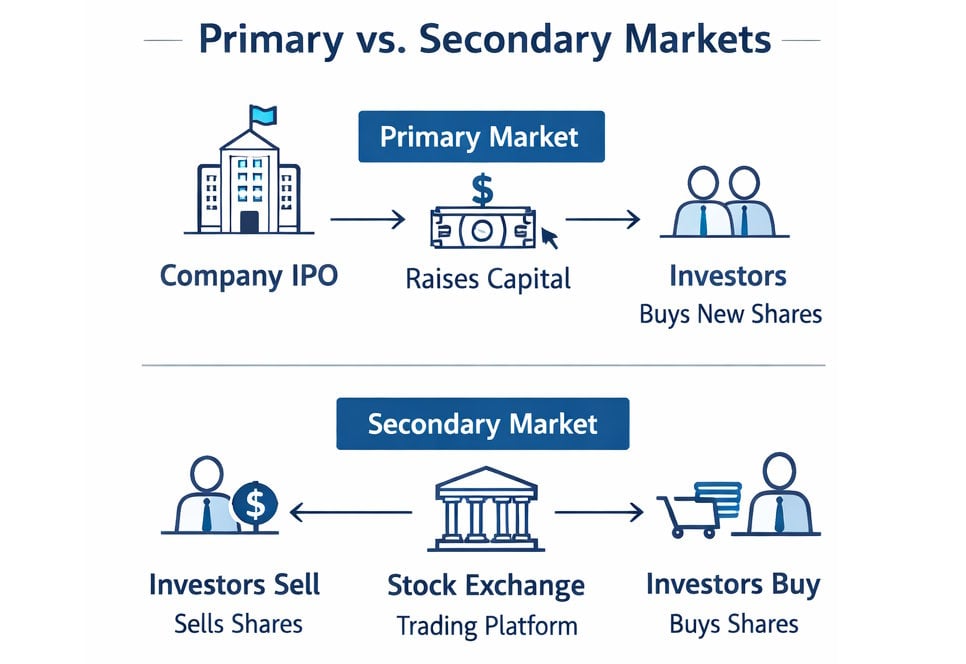
The stock market is the broader ecosystem where these shares are traded. It includes:
- Stock exchanges (the organized marketplaces where trading happens)
- Brokerages (the platforms that let you place orders)
- Investors (individuals and institutions buying and selling)
- Rules and regulators (frameworks that aim to keep trading fair and transparent)
At a high level, the stock market is a global marketplace. It exists across countries and regions, not only in one place.
Why Stock Markets Exist
Stock markets exist for a simple reason: they connect businesses that need capital with investors who want returns.
Why companies participate
Companies use stock markets to raise capital to fund growth—hiring, developing products, expanding into new markets, investing in research, and more—without relying solely on loans and debt.
Why investors participate
Investors buy shares because they believe the company will become more valuable over time, or because they want income (some companies distribute profits to shareholders as dividends). Investors also use the market to diversify—spreading their money across different companies, industries, and regions instead of relying on a single bet.
The tradeoff: reward vs. risk
The stock market offers opportunity, but it is not a guaranteed path upward. Stock prices move because the future is uncertain and business performance changes. Economies weaken or strengthen. People get optimistic or fearful. Understanding this uncertainty is part of learning to invest with discipline instead of emotion.
How Stock Trading Works in Plain English
Every stock trade is a match between a buyer and a seller. The market is constantly balancing two forces:
- Demand: how many people want to buy (and how urgently)
- Supply: how many people want to sell (and how urgently)
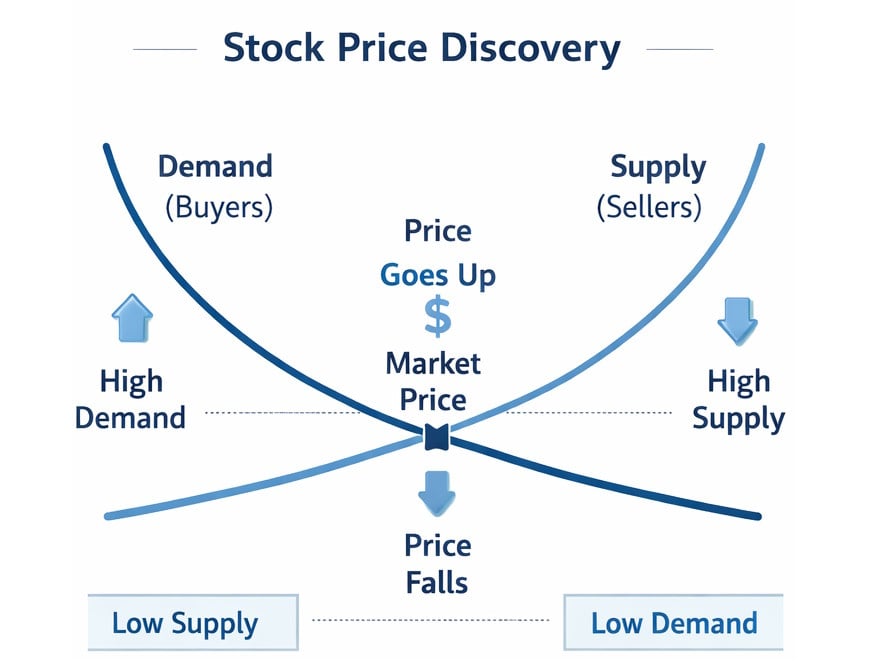
When buyers outnumber sellers at the current price, buyers must offer more to “tempt” sellers—so prices tend to rise. When sellers outnumber buyers, sellers may accept lower prices to get the trade done—so prices tend to fall.
This is the engine behind price movement. It’s not magic. It’s a marketplace negotiating the “current value” based on what participants believe right now.
Primary Market vs. Secondary Market: The Two “Stages” of Stocks
Beginners often assume that when they buy a stock, their money goes directly to the company. Usually, that’s not what happens.
The primary market (the company raises capital)
The primary market is where a company sells shares to raise money—most famously through an IPO (initial public offering) or through later share issuance. In this stage, the company receives capital.
The secondary market (investors trade with each other)
The secondary market is where most daily buying and selling happens. Here, investors trade shares with other investors. The company usually doesn’t receive money directly from these trades—what it gains is market valuation, liquidity, and the ability for investors to enter and exit ownership easily.
This difference matters because it explains a key idea: stock markets exist not only to fund businesses but also to create liquidity and price discovery, enabling investors to participate efficiently.
What a Stock Exchange Does (and Why It Matters)
A stock exchange is the organized marketplace where stocks are listed and traded. Exchanges set standards and rules and provide infrastructure that enables trades to happen quickly and reliably.
In real life, you don’t personally walk into an exchange. You place trades through a broker, who routes your orders into the market.
Even though modern trading is mostly electronic, the exchange still matters because it helps create:
- Liquidity (many buyers and sellers available)
- Transparent pricing (continuous quotes and trades)
- Order matching (buy and sell orders paired efficiently)
Stock Market Locations: Why the Market Is Global
The stock market exists in many countries. While the United States hosts a large share of global trading activity, Europe and Asia also have major markets, and exchanges are located worldwide.
This “global network” concept matters for a beginner because investing choices are not limited to your home country:
- You can invest locally (e.g., domestic stocks)
- You can invest internationally (global companies and regions)
- You can diversify by geography (so you’re not dependent on one economy)
But there’s an important detail: markets in different regions can operate under different rules and regulations, so investors should understand what they own and where it trades before they invest.
Where the World’s Financial Wealth Is Concentrated (and Why)
Financial wealth is not evenly spread across the planet. The largest concentrations tend to be in developed economies with long-established businesses, deep capital markets, stable institutions, and mature financial systems.
The course lesson highlights the regions often seen as financial “centers of gravity,” including the United States, Japan, and Europe, and it notes that certain cities hold outsized influence because they are major hubs for banking, corporate headquarters, investment firms, and market infrastructure.
Why the richest countries usually have the biggest markets
This tends to happen for structural reasons:
- Large economies produce large companies
- Large companies attract investment
- Strong investor participation increases liquidity
- Liquidity and trust attract even more capital
- This cycle reinforces the market’s depth and global relevance
In other words, big markets grow big because capital and opportunity attract more capital and opportunity.
Emerging Economies: Growth, Opportunity, and Reality Checks
The course also notes that emerging economies—such as China and India—have been growing in financial wealth and investor attractiveness as their economies develop and modernize.
For a beginner, the key point is balanced:
- Opportunity: faster growth can translate into strong market performance over time.
- Risk: Emerging markets can experience greater volatility, regulatory changes, political uncertainty, and currency risk.
A smart way to think about emerging markets is not as “good” or “bad,” but as different—they often belong in a diversified portfolio, sized appropriately for your risk tolerance and time horizon.
The Beginner’s Mental Model: What You’re Actually Doing When You Invest
If you remember one idea from this lesson, make it this:
When you invest in the stock market, you are choosing to participate in businesses’ future results through a system that constantly updates prices based on collective beliefs, new information, and shifting supply and demand.
That’s why the stock market can feel “emotional” or “irrational” in the short term. Prices move because humans and institutions react to uncertainty. But over longer periods, company fundamentals (earnings power, growth, competitive advantage) tend to matter far more.
So, as a beginner, you want two skills:
- Understand the system (markets, exchanges, global structure)
- Control your behavior inside the system (patience, diversification, and risk management)
This lesson gives you the foundation for both.
Class Questions & Answers
What is the stock market in one sentence?
The stock market is a global system of exchanges where investors buy and sell shares (ownership pieces) of companies, enabling businesses to raise capital and investors to seek returns.
Why do stock markets exist?
Stock markets exist to help companies raise money by selling shares and to give investors a liquid marketplace where they can buy and sell ownership stakes, diversify, and potentially profit from business growth.
How do stock prices change day to day?
Stock prices change through supply and demand: when more buyers compete for shares, prices tend to rise; when more sellers compete to exit, prices tend to fall—reflecting changing expectations about the company and the economy.
What’s the difference between the primary and secondary markets?
The primary market is when a company sells new shares to raise capital (like an IPO), while the secondary market is where investors trade existing shares with each other after the stock is listed.
Why are the biggest stock markets usually in the richest countries?
Rich countries typically have large economies, mature financial systems, and many established companies, which attract capital and create deep liquidity—so their markets become larger and more globally influential.
No I don’t know how much established
I think the biggest are the American and Europe stock markets
Yes I’m still didn’t decide in which stock market I’m going to invest in