
Liberated Stock Trader Pro: Learn Stock Market Investing
Learn stock market investing with the complete online stock trading course by Barry D. Moore, a certified financial analyst from the International Federation of Technical Analysts (IFTA).
Introducing the Liberated Stock Trader Pro Online Investing Course
I am Barry D. Moore, a certified financial analyst and head of research at Liberated Stock Trader. Please let me introduce you to my Liberated Stock Trader Pro stock investing course.
Liberated Stock Trader Course for Only $199
This course will give you everything you need to succeed as an investor. You will be able to grow your wealth with confidence and knowledge.
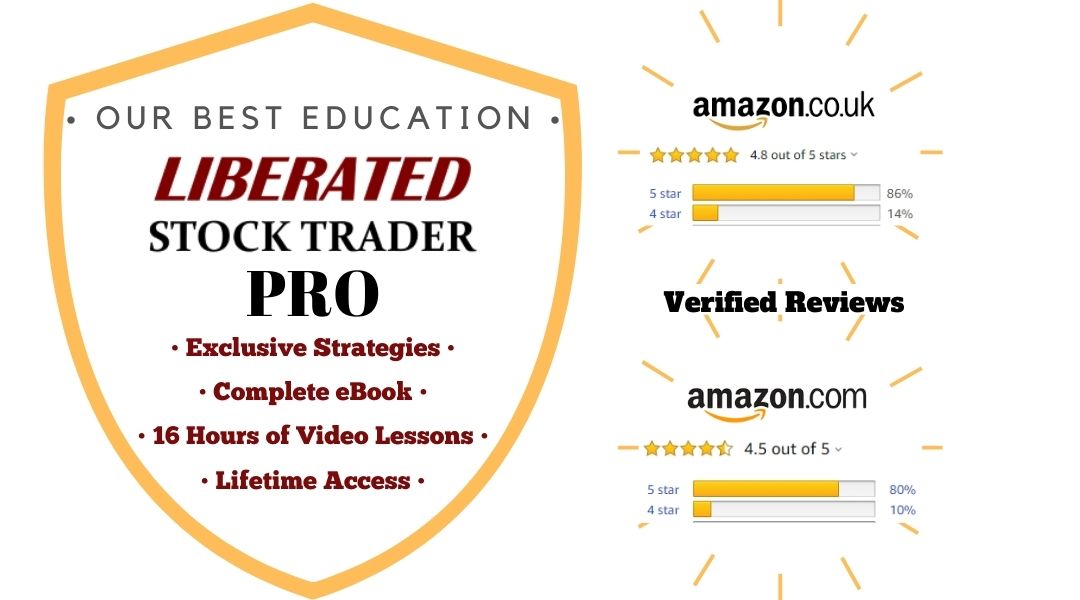
With a 4.5-star Amazon rating, our students think the Liberated Stock Trader Pro course is one of the best ways to learn stock investing. Our 17 online trading classes provide valuable stock analysis, selection, charting, and trade management lessons to grow your capital while minimizing risk.
This stock market course will teach you to invest for long-term wealth building and trade for short-term gains.
Learn How To Invest In Stocks
Learning to invest in stocks means you need to master fundamental financial analysis, which is the foundation for profitable long-term growth, dividend, and value investing strategies. You must learn stock screening to find great companies and build a balanced portfolio to grow wealth.
Learn How To Trade Stocks
Learning to trade stocks requires the technical analysis of stock charts, indicators, and trends. Technical analysis enables traders to improve their market timing and balance risk risk-reward. Good stock traders have proven backtested systems they trade to generate consistent profits.
The Liberated Stock Trader Pro Course
The Only Stock Market Training Course In The Industry To Combine:
★ Stock Trading & Investing ★
★ 6 Value & Dividend Investing Strategies ★
★ Hand-on Stock Screening Lessons ★
★ Deep Fundamental Stock Analysis ★
★ Professional Stock Chart Analysis & Trading Lessons ★
Whether you want to invest long-term or trade short-term, you will have the knowledge you need.
A Stock Market Course For:
Beginners who want to build a well-rounded foundational knowledge of investing and trading.
Experienced investors want to improve their performance and build a strong knowledge of stock chart analysis, fundamental analysis, portfolio, and risk management.
People serious about investing profitably and want to learn at their own speed.
What Is Included?
The Most In-Depth Online Investing Course On The Web
101 Module HD Video Training Course [16 Hours] see course content
Lifetime access to all videos and future course upgrades
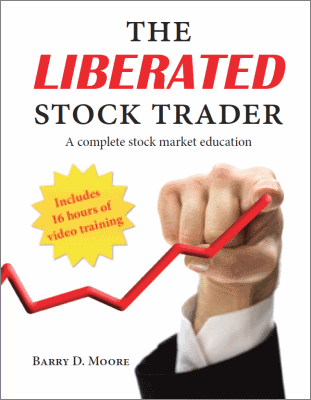
247 Page eBook “The Liberated Stock Trader” (ISBN 978-1460956021) PDF Download
Learn From A Professionally Certified Market Analyst

Barry D. Moore Certified Financial Technician CFTe (International Federation of Technical Analysts IFTA II). 20+ Years Experience
What Our Customers Say – Amazon Reviews
“Good book with very useful information which is easy to understand and clearly explained definitely would recommend it to others.”

“I would recommend this book/course to anyone who wants to learn the basics of technical stock analysis. The format is simple but also, in many ways, elegant. As a newish investor, I was unclear on evaluating and understanding what a stock chart was saying and the implications of emerging patterns. This book and the accompanying online tutorial helped me to grasp many elements of this process. Combining this technical information with chapters on the fundamental analysis made a total story.”
 “When I first started to get into the whole topic of share trading, I didn’t really know where to start. My girlfriend’s father advised me about Barry’s book and that I shall have a look at it. I did myself a favor and bought it as a Christmas gift for myself.
All I ever thought about trading changed immediately when I started reading the book, and I was surprised at how simple it was for me to read and, more importantly, to understand! And that is why the book makes it so special!
Barry is very gifted in teaching people in his own way. Most of the aspects of trading are covered in the book, from fundamental analysis to technical analysis and much more.
It’s the handbook every successful trader should have!”
 The Liberated Stock Trader is a superb educational tool to learn and hone your skills in the world of stock trading and investments.
I found the entire program to be exceptionally straightforward to use, with good explanations of how the market system works. Every chapter is succinct and very effective in showing new and experienced investors how to leverage the stock market best and succeed in the diverse and complicated world of stock market trading.
Additionally, the market analysis tools are superb and greatly expand your skills to develop and grow a diverse portfolio. Keep up the great work!
Learn Investing with 16 Hours of Online Stock Market Training Classes
1. Learn Stock Market Investing: Technical vs. Fundamental Analysis
To learn stock investing effectively, it is important to understand the different approaches to stock analysis. Technical analysis is a powerful technique to assess market supply and demand, and fundamental analysis looks at company financials, like earnings, cash flow, and valuation.
This class will cover the most important core concepts that nobody teaches but that you need to understand when beginning to learn investing.
Class 1 Lessons:
- Fundamental vs. Technical Analysis: The Real Differences
- Pros & Cons of Fundamental Analysis
- Pros & Cons of Technical Analysis
- Economic Theory & Reality
- Dow Theory & How Markets Move: Tides, Waves & Ripples
- Includes a class project
Class 1 Video: Investing with Technical & Fundamental Analysis
After completing this course, you will understand the pros, cons, and differences between technical analysis (trading) and fundamental analysis (investing). This critical lesson will lay the foundation for your future knowledge and learning.
2. Learn What Moves Stock Markets? Big Money & Governments!
Successful long-term investing requires you to understand what forces determine the direction of stock markets. Pension funds, governments, central banks, and the business climate all impact the overall direction of the stock markets.
So, whether investing in individual stocks or buying broad market ETFs, understanding these concepts is critical to success.
How Does The Stock Market Really Work?
This class uncovers fundamental concepts like how global events impact your investments and the truth behind booms, crashes, and crises. You have heard the term “Don’t fight the Fed,” but this class takes it to a new level.
Class 2 Lessons:
- How Global Events Impact Your Investments
- The Truth About Boom & Bust
- How Monetary Policy Drives The Stock Market
- Interest Rates vs. The Stock Market
- Interest Rates vs. SP500 PE Ratio
- The Stock Market vs. Unemployment vs. Prime Rate
- Why Fiscal Policy Determines Market Direction
- Includes a class project
Class 2 Video: What Really Moves Stock Markets
Master the Markets for Only $199, With Life Time Access & Support
The main focus of this class is to help you understand what powers the stock market. After taking this class, you will know if the time is right to invest or stay on the sidelines waiting for better buying opportunities.
3. How Stock Markets Move: Business Cycles & Elliott Waves
An important concept in learning stock investing is knowing the best time to invest. Stock market cycle analysis will help you know the best days, weeks, months, and years to begin investing.
Knowing how the markets move is the key to making informed long-term investing decisions.
Class 3 Lessons:
- How Stock Markets Move
- The Kondratieff Wave
- The Kuznets & Juglar Cycles
- The Decennial Pattern
- The Business Cycle / Kitchin Cycle
- Seasonal Cycles: The Best Months to Buy & Sell
- The Best Days of the Week To Buy
- From Cycles to Waves, Elliott Waves!
- Elliott Waves & Fibonacci Numbers
- Includes a class project
Class 3 Video: How Stock Markets Move
After taking this class, you will understand how the market moves and know what to expect in the next months, years, and decades.
4. Stock Market Fundamentals Course
In this investing class, you will learn the most important fundamentals of company financials. Fundamental analysis is important because the more revenue, cash, and profits a company generates, the more its stock price increases.
Fundamental analysis helps you decide which stocks are worth investing in right now. There are many financial metrics and ratios, but there are few that really move stock prices.
Class 4 Lessons:
- Important Investing & Business Fundamentals
- Mastering EPS & Measuring Success
- Professional Business Lifecycle & Stock Categorization
- Truly Understanding Price Earnings (PE Ratio)
- A Crash Course in Fundamental Analysis
- Finding Cash-Rich Companies-Cash per Share
- How to Find Undervalued Stocks
- How to Analyze Growth Stocks
- Analyzing Blue Chips & Cyclical Stocks
- Analyze Defensive & Turnaround Stocks
- Includes a class project
Class 4 Video: Learn Stock Analysis
Impressed? Get this Course for 90 Days Risk-Free
After taking this class, you will understand a business’s most important fundamental measures, like EPS, PE ratio, debt, revenue, profit margin, sales, and earnings acceleration. This is a practical crash course in fundamental analysis to build your skills as a stock analyst.
5. Learn 3 Major Investing Strategies: Dividend, Value & Growth
Understanding dividend, value, and growth strategies is a huge step in attaining the knowledge you need for consistent stock investing. The best investing strategy is based on your preferences, but understanding all three is critical.
This class will teach you the three big stock investing strategy concepts and show you which are the most profitable.
Class 5 Lessons:
- What is Growth Investing?
- What is Value Investing?
- What is Dividend Income Investing?
- Which is Best, Value, Income, or Growth Stocks?
- Which is Best, Value, Income, or Growth Funds?
- The Truth Behind Investing Strategies.
- Includes a class project
Class 5 Video: The 3 Big Stock Investing Strategies
After taking this class, you will understand the pros and cons of each stock strategy, which one is most profitable, and which is right for you.
6. Learn How to Invest in Value Stocks & Go Bargain Hunting
Understanding and creating a value investing portfolio is intellectually rewarding and benefits your portfolio’s bottom line. Warren Buffett, one of the world’s richest men, owes his wealth to value investing. You will learn the skills of this powerful stock strategy.
This class teaches you how to implement a successful Warren Buffett-style value investing strategy.
Class 6 Lessons:
- Value Investing Strategy & Stock Selection Criteria
- Maximizing Value, Minimizing Risk With Margin of Safety
- How to Screen Stocks for Value Investing
- Hands-On Stock Screener & Strategy Setup
- Analyzing Researching Selecting Value Stocks
- Value Stock Qualitative Analysis Summary
- Includes a class project
Class 6 Video: Learn Value Investing Like Warren Buffett
This lesson takes learnings from Mary Buffett’s book, “The New Buffettology,” I will show you how to directly implement a first-class value investing methodology and start building your value stocks portfolio. After taking this class, you will understand important concepts like discounted cash flow, fair value, and the margin of safety. You will be able to find undervalued stocks that represent real value.
7. Learn 4 Long-term Dividend Income Investing Strategies That Make You Money When You Sleep.
No stock investing course would be complete without learning to invest for regular, safe income. This class explains four dividend investing strategies ranging from super safe to high dividend income. You will learn exactly how to find companies to match your risk appetite.
You will learn four strategies, ranging from a risky high dividend yield investing strategy to a super safe dividend king investing strategy.
Class 7 Lessons:
- Finding the Best Dividend Stocks to Invest In
- Dividend Strategies Screener Setup
- Highest Dividend Yield Strategy
- High Dividend 3-Year Growth Strategy
- Undervalued Dividends Stocks Strategy
- Safe Dividends Aristocrats Stock Strategy
- Includes a class project
Class 7 Video: Regular & Safe Dividend Strategies
After taking this class, you will understand important dividend yield, dividend coverage, and dividend payout ratio concepts and how to implement them to create your dream income portfolio.
8. Learn to Trade Using Stock Charts
Many people look at stock charts, but few truly understand technical analysis. Stock charts are a window into the soul of the stock market and unveil the hidden secrets of supply and demand.
This professional charting class will show you how to set up and use high-quality charts and indicators.
Getting Started Understanding Stock Charts
This class will show you how to read a stock chart, choose a great free stock charting software platform, and how to use it. I will also teach you how to use OHLC bars and Japanese candlesticks to understand short-term stock price direction.
Class 8 Lessons:
- Selecting the Right Stock Charting Software
- How to Use Stock Charts
- Introduction to Stock Chart Indicators
- What is Stock Backtesting?
- How to Setup a Stock Chart
- Using Japanese Candlestick Charts
- Automating Candlestick Recognition
- Includes a class project
Class 8 Video: Learning Stock Charts
Yes, for only $199, This Course is Yours
After taking this class, you will understand how to properly set up and use stock charts and interpret stock prices.
9. How to Read Stock Charts, Trendlines & Patterns Like a Pro
This class will show you exactly how to analyze stock charts like a professional. You will learn how to draw trendlines to determine the direction of a stock. You will know how to use those trendlines to make forecasts and establish rules for buy and sell decisions.
Class 9 Lessons:
- Drawing Professional Stock Chart Trendlines
- Using Trendlines For Buy-Sell Decisions
- Reversal & Continuation Price Patterns
- Gap Patterns in Stock Charts
- Wedges Megaphone Price Patterns
- Includes a class project
You will also learn about stock chart price patterns, which will help you understand whether a stock price will continue in its current trend or change direction.
Class 9 Video: Using Stock Chart Patterns Like a Pro
After taking this class, you will have made a significant step forward in understanding stock trends, patterns, and their hidden meaning.
10. Learn to Master Stock Chart Indicators
Learning stock trading is not complete without mastering stock chart indicators. Traders can only make good investing decisions when they truly understand how to use chart indicators and how to test their efficacy.
This class will show you exactly how to use stock chart indicators like a professional technical analyst. You will learn about the most powerful indicators: Moving Averages, Stochastics, Momentum, Rate of Change, Relative Strength, and MACD.
But no indicator is perfect; you will learn how to decide which indicators are right for your strategies.
Class 10 Lessons:
- Understanding The Moving Average Indicator
- Using Multiple Moving Averages Like a Pro
- How to Use the Stochastics Indicator
- The Power of Momentum
- Rate of Change (ROC)
- Relative Strength Index (RSI). How strong is your trend?
- MACD – The Fuel in the Tank
- Includes a class project
Class 10 Video: Unleashing Stock Chart Indicators
11. Learn How to Trade Stocks Using Volume
No investor learning stock trading can call themselves an expert without a clear understanding of volume. Volume in stock charts is the key to understanding supply and demand. Volume is the rocket fuel that powers stock prices.
I will show you how to use volume in technical analysis in this class. Why is volume important? Volume is the key to understanding supply and demand in stocks. When you understand supply and demand, you understand the battle between the bulls and bears.
Class 11 Lessons:
- The Golden Rules of the Volume Indicator
- OBV On Balance Volume
- Money Flow Power Charts
- 10 Tips for Using Chart Indicators Like a Pro
Class 11 Video: How Volume Powers Stock Prices
Most people who say they are stock investing experts do not understand volume. After taking this class, you will truly understand the importance of volume and wield it like a weapon.
Supply & Demand Mastery for Only $199, With Life Time Access & Support
12. Learning the Charting & Trading Secrets of the Pros
Learning the charting and investing strategies investment banks and hedge fund analysts use is important to your trading success. You do not see this analysis on Bloomberg or anywhere else; these strategies are behind closed doors deemed too advanced for retail investors.
This lesson covers high-probability stock charting techniques.
I will show you how to use advanced stock charting techniques that professional financial market analysts must learn to become professionally certified.
Class 12 Lessons:
- Parabolic SAR
- Ichimoku Cloud Charts
- Bollinger Bands
- Directional Movement System ADX
- Market Breadth
Class 12 Video: Powerful Pro Charting Techniques
This lesson is not just about the indicators and charts but about how to use them. There are very powerful techniques designed to give expert technical analysts an advantage. After watching this video, you will have a well-rounded knowledge of advanced charting techniques and technical analysis to make good trading decisions.
13. Learn Stock Market Investor Sentiment: Mastering Fear & Greed
Arguably, the most important lesson in investing is understanding what the market thinks. Warren Buffett said, “Buy when others are fearful, and sell when they are greedy.” Buffett is saying you need to understand the power of stock market sentiment.
In this class, I will show you how to interpret and understand a special area of stock market analysis called sentiment. Market Sentiment is the methodology of understanding the market’s levels of fear and greed.
Greed makes markets rise; Fear makes markets fall. But at their extremes, fear and greed are great for contrarian investing.
Class 13 Contents:
- Sentiment and crowd dynamics
- Traditional Sentiment Indicators Investors Intelligence
- The Liberated Stock Trader Fear & Greed Index
- Trading the News
- Real-time News for Traders
- News that Impacts the Market
Class 13 Video: Learning Stock Market Fear & Greed
Get this Course for Only $199; It’s a Great Investment
After taking this class, you will be able to accurately understand the current level of fear and greed in the market using sentiment indicators and, therefore, know the market’s direction.
14. Stock Trading & Investing Strategy: Compounding Wealth Over Time
You now understand how markets move, investing strategies, stock charts, and sentiment. The next step on your stock investing journey is understanding the best strategies for you.
This lesson helps you understand what approach to investing you want to take.
Class 14 Contents:
- Why a trading strategy is important
- What type of investor are you?
- What are your goals?
- How do you quantify your goals?
- How everyone can become a millionaire by investing in the stock market
Class 14 Video: Trading & Investing Strategy
After taking this class, you will understand compounding and the realities of investing in stocks.
15. Learning Trading Psychology & Success Mindset
Understanding how the mind works when trading is a critical lesson in learning to invest. You need to understand the mental processes that can occur once you have invested in the stock market.
You will learn about yourself and the different personality traits that define what you do when your money is on the line.
Class 15 Lessons:
- Testing Your Personality Type
- The Psychology of Trading: Positive Personality Traits
- The Psychology of Trading: Negative Personality Traits
Class 15 Video: Learning Trading Psychology
After taking this class, you will be able to identify what is going on in your thought processes and, hopefully, make adjustments that will help you improve your chances of success in investing.
16. Learning How to Buy & Sell Stocks for Profits
One of the final steps in your stock investing learning path is understanding how to reduce risks and build a manageable portfolio. How many stocks should you own, and how do you measure and reduce risk with stop losses?
This lesson helps you understand best practices for managing your trades.
Class 16 Lessons:
- Tracking your Trades – Traders Journal
- How many stocks should I own?
- Timing and Stop Losses – The Escalator Method
- Cash Allocation & Betting in Trading
- Risk–Reward Trading Investing
- Setting Stock Price Targets
Class 16 Video: Making Low-Risk Profitable Trades
After taking this class, you will improve your risk management and cash allocation. You will also have techniques for continually learning and setting stop losses and price targets.
17. Create Your Own Stock Investing & Trading System
The final step to mastering stock investing is creating your own unique and profitable investing strategy. Creating your strategy is your crowning glory; this course shows you exactly how to do it.
How To Create Your Profitable Unique Strategy
This video will show you how to build your unique stock trading and investing system. We will combine the best technical analysis, fundamental analysis, economics, news, and sentiment indicators.
Class 17 Lessons:
- What is your system?
- Building your Chart to build your system
- The Trading System Workbook
- Learn How to build a chart and learn to test the indicators critically
- Plot Buy & Sell Signals on the charts to refine your system
- Downloadable Resources Included
Class 17: Your Own Stock Investing System
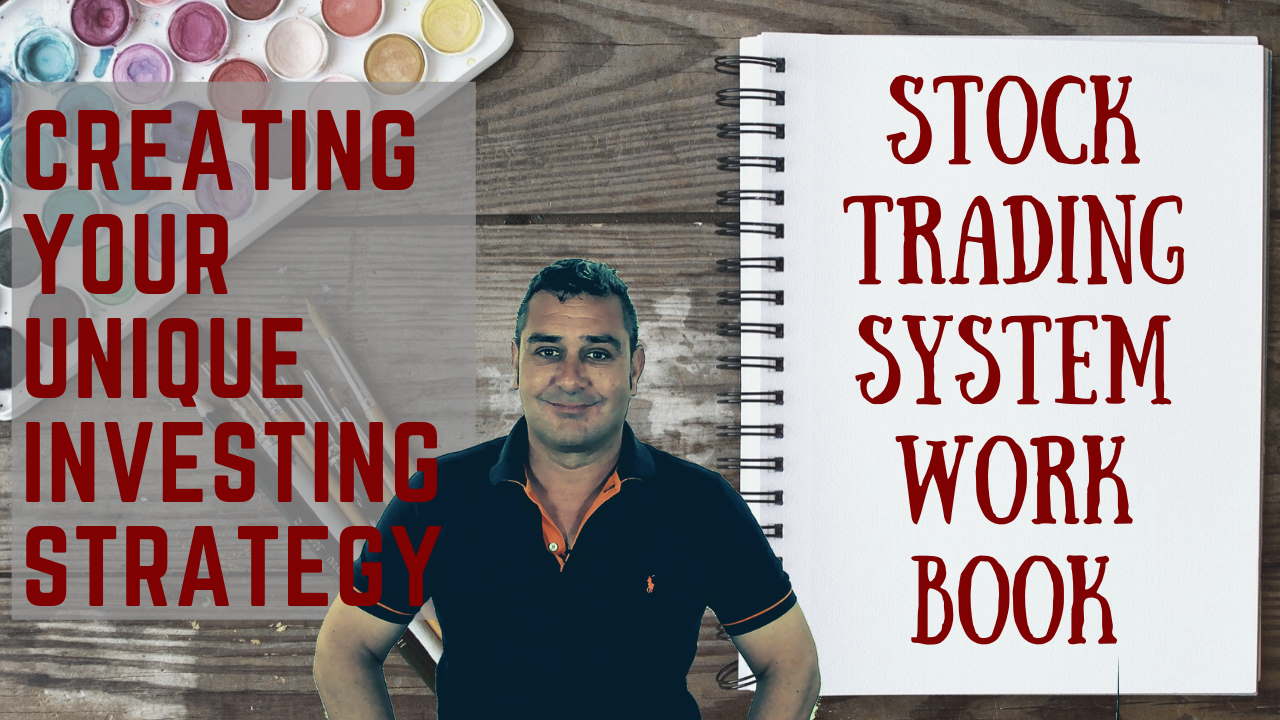
I will then go through the Stock Traders Workbook, which combines all the disciplines of stock market investing into a structured process that you can use to build a unique trading or investing strategy.
Are You Ready To Become A Highly Trained Investor?
Hold The Press. Get An Additional Bonus
You Can Follow And Message Me Live on TradingView
Upgrade Your Skills – Go PRO Now
Liberated Stock Trader PRO Training Course
101 HD Video Lessons [16 Hours]
+
Full ebook/pdf Downloadable
“The Liberated Stock Trader” (ISBN 978-1460956021)
+
Free Lifetime Upgrades
+
TradingView Live Chat Room
+
Practical Class Projects
Imagine confidently investing in stocks and seeing your portfolio grow.
That’s what you can achieve; this course provides all the information and tools you need to make smart, profitable investments.
So why wait? Start learning today!

Pay Securely With PAYPAL $299 Now $199

Pay Securely With Credit Card $299 Now $199
 Item
Item
If you have any questions on the course or issues with the payment process, please get in touch with me directly at:
✉ support (at) liberatedstocktrader.com
Frequently Asked Questions
What support should I expect with this stock market training?
You can email our support team 24/7 for any sales support. If you have stock market-related questions, you can chat with your teacher, Barry@tradingview.
What returns policy should I expect with this training course?
We pride ourselves on your satisfaction and offer an industry-leading 90-day worry-free returns policy if you are in any way unhappy with this training.
Which is the best course for the stock market?
Many stock market training courses claim to be the best, but very few have industry-certified financial analysts as teachers. The Liberated Stock Trader Pro course is a complete stock investing education from a recognized market analyst.
How do I teach myself the stock market?
You can teach yourself stock trading with books. Stock trading books provide a rich source of knowledge and wisdom, but they are also very time-consuming to read. A curated stock market training course is a fast-track way to learn investing.
Are stock courses worth it?
Many stock courses are not worth it; they are overpriced and taught by amateurs. Ranging from $1,000 to $5,000, most stock trading courses promise sky-high profits but deliver little value. The Liberated Stock Trader Pro training course is worth it, costing only $199 and delivering industry professional training and lifetime support.
Can I learn stock market for free?
Yes, many resources are available to help you learn about the stock market for free. Try the 4 free stock market training courses from Liberated Stock Trader to get started.
How many years it will take to learn stock market?
It is possible to theoretically learn about the stock market in 40 hours. But understanding the stock market and gaining practical experience in investing can take at least 2 years. There are stock investing courses that can speed up the process, but it takes time to study and learn about the financial markets.
How much does a stock trading course cost?
Be careful when choosing a stock trading course. Many are overpriced and offer trading rooms that cost up to $5,000. There are courses offered by the CMT in the USA or IFTA in Europe that offer industry certifications for $2,000. Alternatively, the Liberated Stock Trader Pro Training costs $199 and offers a similar level of quality.
How do I start investing in stocks with no knowledge?
There are some excellent stock trading courses for complete beginners with no knowledge. Our free investing in stocks courses cover a high-level overview of technical stock chart analysis, ETFs, funds and value, growth, and dividend investing strategies.
Which trading is best for beginners?
The best trading for beginners is investing in long-term stock market ETFs or index-tracking funds. Day trading and swing trading are not good options for beginners unless you have money you do not mind losing.
What is the smartest way to start investing?
Like any profession, the smartest way to start investing is to get a good quality education. Learn how the market works and the theory and practice of good stock selection and portfolio management.
Can trading make you rich quickly?
No, stock trading cannot make you rich quickly. The reality is you can only expect a maximum of 25% per year profits, whether you are day trading or value investing like Warren Buffett. There are no quick riches in the stock market or anywhere else.
Liberated Stock Trader Pro Investing Course

Learn stock market investing with the complete online stock trading course by Barry D. Moore, a certified financial analyst from the International Federation of Technical Analysts (IFTA).
Course Provider: Person
Course Provider Name: Barry D. Moore
Course Provider URL: https://www.liberatedstocktrader.com/stock-market-training/
Course Mode: Online
Course Workload: PT16H
Duration: PT20H
Repeat Count: 1
Repeat Frequency: Monthly
Course Type: Paid
Course Currency: USD
Course Price: 199
5